

Generic conversation advice — “ask open-ended questions,” “find common ground” — doesn’t account for the specific social dynamics of a cruise ship or all-inclusive resort. At a cocktail party, you might never see the person again. On a seven-day cruise, the person you awkwardly bump into at the buffet on day one is at your assigned dining table every night through day seven. The stakes and the context are different. Knowing how to make friends on a cruise or resort requires a different set of conversation starters — ones built for the environment, the timeline, and the social structure of vacation travel.
This guide covers what actually works: cruise-specific and resort-specific openers, how to navigate the unique social situations those environments create (dining tables, shore excursions, pool decks, embarkation day), and how to handle the ones that get complicated.
Quick Takeaways:
- Introverts often do better on cruises than at parties — the structure (dining times, activities, excursions) does some of the social work for you
- Cruise ships create unusually intimate social environments — you’ll see the same people repeatedly, which means first impressions matter more than at a one-off party
- Embarkation day and the first sea day are the highest-opportunity moments for meeting people — social patterns lock in fast
- Assigned dining tables are the single best relationship-builder on a cruise — lean into them
- Shore excursion groups and pool decks are the easiest casual entry points at resorts
- The best cruise and resort conversation starters are always rooted in the shared experience right in front of you
- Introverts often do better on cruises than at parties — the structure (dining times, activities, excursions) does some of the social work for you
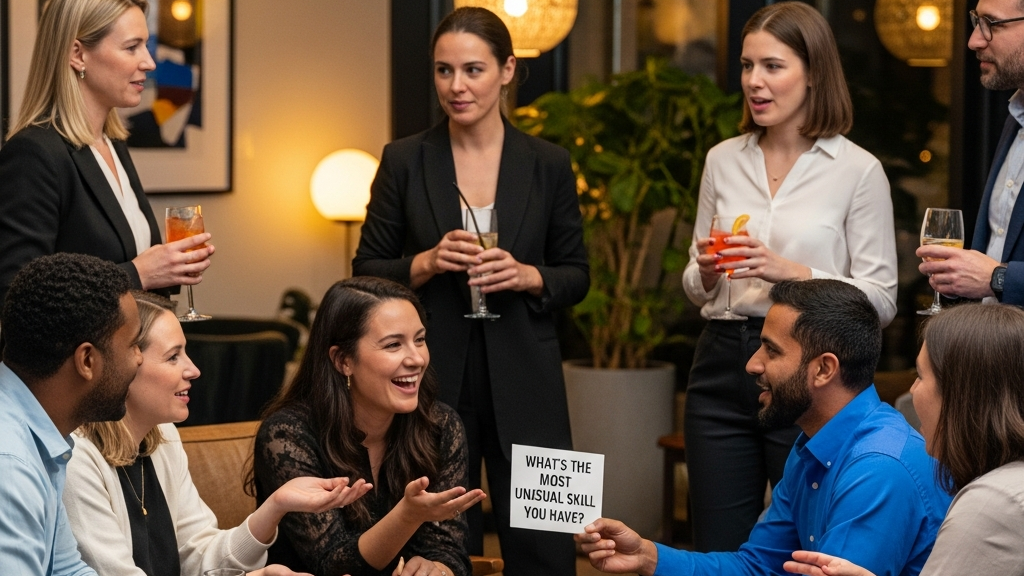
Why Cruise and Resort Social Dynamics Are Different
The Repeated Encounter Problem (and Opportunity)
At most social events, an awkward interaction simply ends. On a cruise ship, it follows you. The person you had a stilted five-minute conversation with at the Lido deck bar on day one is going to be at the next port, at the same shows, possibly at your dining table. This is both the challenge and the opportunity of cruise social life.
The challenge: there’s more at stake in early interactions. A rough start is harder to shake on a ship than it would be at a party.
The opportunity: repeated exposure over multiple days naturally deepens connections in ways that single-event socializing rarely does. People who meet on cruises and become genuinely close friends — or travel companions for future trips — are common. The environment accelerates connection in a way that’s hard to replicate on land.
What this means practically: Don’t rush to make a strong impression in the first conversation. Be friendly, be curious, be low-pressure. The goal of day-one conversation on a cruise isn’t to become best friends — it’s to leave a good enough impression that you’re happy to see each other again on day two.
The Resort Dynamic: Less Structured, More Casual
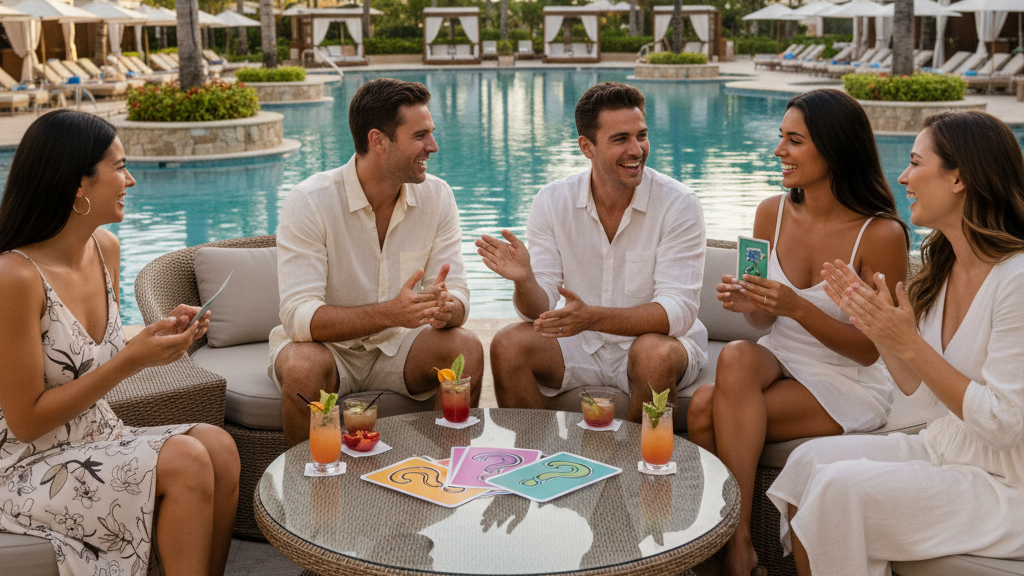
All-inclusive resorts don’t have the same forced-proximity structure as cruise ships. There’s no assigned dining table, no gangplank you all walk through together, no sea day with nothing to do but socialize. At a resort, connections happen more organically — at the pool, at the swim-up bar, on an excursion — and tend to be lighter and more casual.
The best resort conversations happen when you’re both already doing something: waiting for a cocktail, watching a sunset, deciding between excursions. The shared context does the heavy lifting; you just have to notice it and say something.
Table of Contents

Cruise Conversation Starters by Situation
Embarkation Day: The Highest-Value Window
Embarkation day is the most socially open day of any cruise. Nobody knows anyone yet. Everyone is in the same slightly-disoriented, excited state. The social patterns that will define the week haven’t formed yet. This is when connections are easiest to make and most likely to stick.
- “Is this your first cruise, or have you done this before?” The foundational cruise opener — and it’s reliable because it works in both directions. First-timers are enthusiastic and curious; veterans are happy to share knowledge. Either response gives you somewhere to go.
- “Which cabin deck are you on? We’re still figuring out the layout.” Low-pressure, practical, invites them to orient alongside you. Creates immediate camaraderie around the shared confusion of a new ship.
- “Have you cruised this line before? We’re trying to figure out what we’re actually in for.” Invites expertise-sharing in a self-deprecating way that most experienced cruisers find flattering and enjoyable.
- “We’re trying to pick between two excursions at [port] — have you been there before?” Practical question with real utility. Even if they haven’t been, it opens a planning conversation that can continue over multiple days.
- “Are you doing the muster drill near [location]? We’re trying to figure out where to go.” The muster drill is a universally shared experience on embarkation day — everyone goes through it, everyone finds it slightly confusing the first time. A great low-stakes opener.
At the Assigned Dining Table
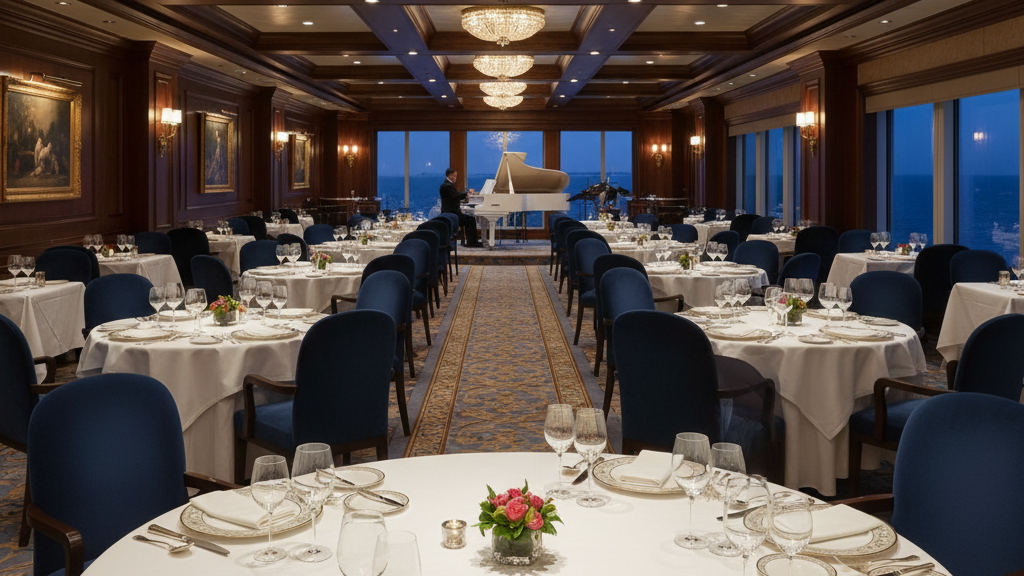
Assigned dining on a cruise is genuinely unusual in modern travel. You’re placed with strangers and expected to share meals with them for seven days. This sounds awkward in theory. In practice, it’s the single best relationship-builder on a cruise ship — if you approach it right.
- “What made you choose this cruise?” Every person at the table has a story that led them here — anniversary, bucket-list trip, a travel agent’s recommendation, their third time on this ship. The answers are almost always interesting and open multiple follow-up threads.
- “Have you tried anything on the menu that surprised you?” Food is the universal low-stakes conversation topic, and at a cruise dining table it’s right in front of you. Sharing reactions to dishes creates immediate common ground.
- “Which port are you most looking forward to?” Forward-looking and positive. Creates shared anticipation and often reveals different travel priorities that make for good conversation over subsequent evenings.
- “What do you do when you’re not on a cruise?” Better than “what do you do for work?” — it opens to hobbies, family, interests, not just job titles. Works particularly well with retirees who may not identify strongly with a former profession.
- “Any recommendations from last night’s show?” By day two or three, shared experiences have accumulated. Referencing them builds on the relationship that’s already developing rather than starting from scratch each dinner.
At the Pool Deck and Lido Bar
Pool deck conversation is lower stakes than dining table conversation — you might never see this person again, or you might end up spending the afternoon with them. Either is fine. The goal is a light, easy opener that lets the other person engage or disengage naturally.
- “How’s the water? Is it worth getting in?” The simplest possible pool opener. Practical, friendly, requires nothing from them. If they want to chat, they will; if they don’t, they answer and you both move on.
- “We’ve been trying to figure out where to stake out chairs for sea days — any strategy you’ve found that works?” Light humor about the chair-saving situation every cruise has. Most people have an opinion and are happy to share it.
- “What’s that drink? I keep seeing people order it.” At the swim-up bar or pool bar, this is the easiest opener there is. Leads to drink recommendations, which leads to ordering together, which leads to conversation.
- “Where are you from originally?” Classic, reliable, works at any resort or cruise pool deck. Leads to geography, travel comparisons, “oh have you ever been to…” threads that can go anywhere.
- “Have you done the [specific onboard activity] yet? We can’t decide if it’s worth it.” On cruise ships with extensive activity programming, asking for recommendations creates both useful information and conversation.
On Shore Excursions
Shore excursion groups are the most naturally social context on any cruise. You’re all going to the same place, for the same amount of time, with the same constraint (be back before the ship leaves). The shared mission creates instant camaraderie.
- “Is this your first time at this port? We’re trying to figure out what we’d be missing if we skipped this.” Self-deprecating and invites their perspective. Works whether they’ve been before or not.
- “Have you done any other excursions on this trip? Anything you’d recommend for the next port?” Extends the conversation naturally toward future shared experiences — and gives them something useful to offer.
- “Did you book through the cruise line or independently?” The cruise-line-vs-independent-operator debate is one every experienced cruiser has an opinion on. Invites a real conversation with substance.
- “What’s your plan when we get back to the ship? We haven’t figured out if we’re doing dinner first or hitting the pool.” Planning conversation that moves naturally toward “you should join us” if the connection is good.
At the Cruise Bar or Evening Venues
- “Are you here for the [show/trivia/music]? Is it worth staying for?” Venue-specific opener with real utility. Even a no gives you something to talk about.
- “We’ve been trying to find the best bar on the ship — any candidates?” Bar recommendations on cruise ships are a surprisingly passionate topic. Most veteran cruisers have a strong opinion about the best spot.
- “Cheers — what are we celebrating tonight?” Casual toast-based opener. Works especially well at specialty bars and in the evenings when the atmosphere is more relaxed.
- “Are you going to [next port] tomorrow or taking a sea day?” On sea days, most guests are on the ship voluntarily rather than at port. Knowing who else is around creates conversation and potential plans.
Resort Conversation Starters by Situation
At the Pool and Swim-Up Bar
- “Is this your first time at this resort?” The resort equivalent of the cruise first-timer question — equally reliable, equally versatile. Veterans share tips; first-timers share excitement.
- “Have you done any excursions yet? We’re trying to figure out if we should book through the resort or on our own.” Practical question that taps into a real decision most resort guests face. Creates a planning conversation with substance.
- “What’s been your favorite part so far?” Positive, open-ended, easy to answer from day one. Reveals their interests and priorities without requiring much from either party.
- “Are you here for a special occasion?” Many resort guests are celebrating something — anniversary, birthday, retirement, honeymoon. Special occasions create warm, easy conversation. If they’re not, “just needed a vacation” is a relatable answer that works just as well.
- “How’s the [restaurant/activity/pool area] been? We haven’t tried it yet.” Asks for a recommendation while giving them something useful to offer. The practical framing makes it easy to answer.
At Resort Restaurants and Bars
- “That looks good — what did you order?” Food-based opener that works at any resort restaurant. Short, easy, no commitment required from either person.
- “Have you tried the [signature cocktail/local specialty]? We’ve been seeing it everywhere.” Drink-based opener at resort bars. Most people have an opinion about the signature drink and are happy to share it.
- “Any restaurants you’d recommend? We’re trying to figure out the reservation situation.” At resorts with multiple restaurants and reservation systems, this is a genuinely useful question that creates real conversation.
- “Beautiful sunset, isn’t it?” The simplest observation in the book — and still works at a beachfront resort bar at the right moment. Sometimes the obvious opener is the right one.
The Psychology of Cruise and Resort Conversations
What Makes These Openers Work
The conversation starters above share a few structural features worth understanding — because once you understand them, you can generate your own on the fly rather than trying to memorize a list.
They’re rooted in the shared context: Every opener above references something specific to the cruise or resort environment. This matters because it removes the artificiality of a cold approach — you’re not starting a conversation out of nowhere, you’re responding to what’s literally in front of both of you.
They invite expertise: Most of the best cruise and resort openers position the other person as someone who might know more than you — about the menu, the port, the ship, the resort. People enjoy sharing knowledge. “Have you tried this?” works better than “isn’t this great?” because it treats them as a resource, not just an audience.
They’re low-commitment: A one-sentence answer closes the loop without awkwardness. If they want to keep talking, the door is open. If they don’t, nothing was lost. The best vacation conversation starters never corner anyone.
Reading the Room
- Book open vs. closed: Someone reading with their chair angled away from the pool isn’t actively looking for company. Someone at the swim-up bar with no book, watching the scene, almost certainly is. Read positioning before approaching.
- Couple dynamics: Couples who are deep in conversation with each other are not looking for a third participant. Couples sitting in companionable silence watching the water often are. The difference is usually obvious.
- Headphones: Headphones on at the pool or beach mean leave me alone. Headphones around the neck or in hand mean maybe. Neither in sight usually means open to interaction.
- Time of day: Morning pool time tends to be quieter and more solitary. Afternoon swim-up bar is the most socially active window. Evening at the resort bar is the highest-energy social moment. Match your approach to the energy of the moment.
Advanced Techniques for Cruise Socializing
The follow-up reference: On day two or three of a cruise, referencing something from a previous conversation — “did you end up doing that excursion you were thinking about?” — does more social work than any opener. It shows you remembered, which is the fastest way to move from acquaintance to actual connection.
The dining table check-in: If you’ve met someone at the pool or bar, seeing them at dinner is an opportunity: “We ran into [name] at the Lido deck earlier — have you two met?” Introductions expand the social circle and make you the social connector, which is the highest-value role at any dinner table.
Shore excursion planning as social glue: “A few of us from dinner are thinking about doing [excursion] at [port] — want to join?” is the most natural social invitation on a cruise. It’s specific, it’s logistically convenient, and it creates a shared experience that deepens the relationship.
For Introverts: How the Cruise Structure Actually Helps
Most social advice assumes the hard part is initiating — and for introverts, it often is. But cruise ships and all-inclusive resorts have a structural advantage that makes socializing easier for introverts than most land-based social situations: the environment does a lot of the work.
- Assigned dining tables remove the approach problem: You don’t have to decide to sit with strangers — you’re placed with them. The hard part is done. Your only job is to be pleasant, which is a much lower bar than initiating from scratch.
- Scheduled activities provide natural entry points: Trivia night, cooking classes, wine tastings, shore excursion groups — these structured activities create shared context and conversation without requiring you to walk up to someone cold.
- Quality over quantity: Introverts tend to thrive in deeper one-on-one conversations rather than wide social circles. A cruise dining table is exactly that — a small, consistent group where depth is possible. Skip the crowd-working at the nightclub; invest in the six people at your table.
- Built-in exits: Shore excursions end. Dining ends. Shows end. The environment provides natural, graceful exit points from conversations at a pace that works for introverts without requiring any awkward social maneuvering.
Gracefully Ending Conversations and Staying Connected
Wrapping Up Without Awkwardness
On a cruise or resort, you don’t need a hard exit line — the environment provides them. The shore excursion bus is leaving. Dinner is ending. The show is starting. Use these natural breaks rather than manufacturing an exit.
When a natural break isn’t available:
- “It was great talking with you — hopefully we’ll run into each other again this week.” Simple, warm, acknowledges the cruise context without pressure.
- “We’re going to grab a spot by the pool before it fills up — enjoy the rest of your day.” Practical reason, friendly tone, clean exit.
- “Enjoy [the next port/tonight’s show/the rest of your afternoon] — we’ll see you around.” Cruise-specific and warm without committing to anything.
Exchanging Contact Info on a Cruise
Cruise friendships that survive the trip are more common than people expect — particularly dining table connections that develop over a week. If a connection feels worth continuing:
Exchange contact info at dinner on the last night at sea, not at the port on debarkation morning when everyone is distracted and rushed. “We should stay in touch — can I grab your email or Instagram?” is entirely natural after a week of shared dinners.
Facebook and Instagram are usually better than phone numbers for cruise connections — they allow casual low-commitment contact over time without the pressure of being in someone’s contacts.
Some cruise lines have apps with onboard messaging. Exchanging usernames within the app is a lower-commitment way to stay connected during the cruise itself before deciding whether to exchange permanent contact information.
Frequently Asked Questions
Is it normal to make real friends on a cruise?
Yes — more common than most first-time cruisers expect. The combination of repeated encounters, shared meals, and shared experiences over multiple days accelerates connection in a way most land-based socializing doesn’t. Cruise friendships that lead to future travel together are genuinely common, particularly among dining table connections that develop over a full week.
What if I get assigned to a dining table where no one clicks?
Most cruise lines allow you to request a dining table change, usually through the maître d’ on the first or second evening. Frame it as a scheduling conflict or preference for a smaller table rather than a personality complaint. Alternatively, switching to anytime/flexible dining removes the assigned table structure entirely — though it also removes the built-in relationship-building opportunity.
How do I make friends at a resort if I’m not staying at a social property?
The most reliable entry points at quieter resorts: the swim-up bar (the most naturally social space at any resort), organized resort activities (wine tastings, cooking classes, beach volleyball), and excursion booking desks where guests cluster and compare options. If the resort itself is quiet, book one organized excursion — the group dynamic does the social work for you.
What should I avoid saying in a cruise conversation?
Avoid asking about cabin prices or what people paid for the cruise — it’s considered gauche and often leads to awkward comparisons. Skip strong political opinions with people you’ve just met. Don’t make the conversation exclusively about complaints (lines, service, food quality) — it anchors the tone negatively for future interactions. And avoid lingering too long on a topic once someone has given a short answer — short answers usually mean they’re not interested in going deeper on that subject.
How do I handle a dining tablemate I genuinely don’t like?
Be pleasant and minimal. You don’t have to become friends — you have to get through dinner with civility. Focus conversation on other tablemates, use the natural pauses between courses to check your phone or look at the menu, and keep your personal investment low. One difficult tablemate at a table of six rarely ruins the week if you’re genuinely engaged with the others.
Are conversation topics different at an adults-only resort vs. a family resort?
Somewhat. At adults-only resorts, topics like kids, school schedules, and family logistics are irrelevant — which often makes conversation flow more naturally toward travel, food, work, and shared experiences. At family resorts, children become a natural common topic for parents. At adults-only properties, the demographic tends to skew toward couples and solo travelers, and the u0022what do you do when you’re not on vacationu0022 thread tends to go deeper and faster.
Conclusion: The Context Does Most of the Work
Knowing how to make friends on a cruise or resort isn’t primarily about having the perfect opener — it’s about recognizing that the environment is already doing most of the social work for you. Cruise ships create repeated encounters. Dining tables create structured intimacy. Shore excursions create shared missions. Pool decks create casual proximity. Your job is simply to notice what’s right in front of you and say something genuine about it.
The people who come home from cruises with new friends aren’t the wittiest or most charismatic in the room. They’re the ones who showed up to dinner, paid attention, asked follow-up questions the next night, and remembered what people said. On a ship or a resort, that’s enough.
Related Resources:
- Solo Travel While in a Relationship: When One of You Goes, and the Other Stays Home
- First-Time Cruiser Mistakes: What to Avoid Before and After You Board
- Shore Excursions Guide: Cruise Line vs. Independent — What’s Actually Worth It
- Adults-Only Resorts Guide: Why They’re Not Just for Couples
External Resources:
- CDC Travelers’ Health (health recommendations for cruise destinations)
- Cruise Critic (ship-specific reviews, dining table tips, and community forums for cruise social questions)
- U.S. Department of State — Travel (entry requirements and advisories for cruise ports of call)
- https://www.cruisecritic.com/articles/how-to-make-friends-on-a-cruise – Cruise Critic’s guide to making friends on a cruise
- https://www.carnival.com/awaywego/cruising-fun/how-to-plan/14-ways-meet-people-make-friends-cruise – Carnival’s official 14 ways to meet people onboard
- https://www.royalcaribbeanblog.com/2026/01/22/8-ways-meet-people-and-make-friends-cruise – Royal Caribbean Blog’s 8 ways to meet people on a cruise