
Quick Takeaways:
- Main dining rooms offer multi-course dinners with rotating menus and assigned or flexible seating
- Specialty restaurants cost $25-75 per person but deliver higher quality and unique experiences
- Buffets and casual venues operate long hours (6am-midnight) for convenient dining
- Beverage packages ($50-80/day) can save money for frequent drinkers
- Traditional dining builds relationships with servers; anytime dining offers flexibility
Cruise ship dining is often cited as a vacation highlight, with multiple restaurants, diverse cuisines, and unlimited food available throughout the day. Understanding how cruise ship dining works helps you maximize your culinary experience, from formal main dining rooms to casual poolside grills and premium specialty restaurants. This comprehensive guide covers everything about eating and drinking on cruise ships.
Main Dining Room Experience
The main dining room serves as the traditional heart of cruise ship dining, offering multi-course dinners with table service, elegant settings, and nightly menu changes.
How Main Dining Rooms Work
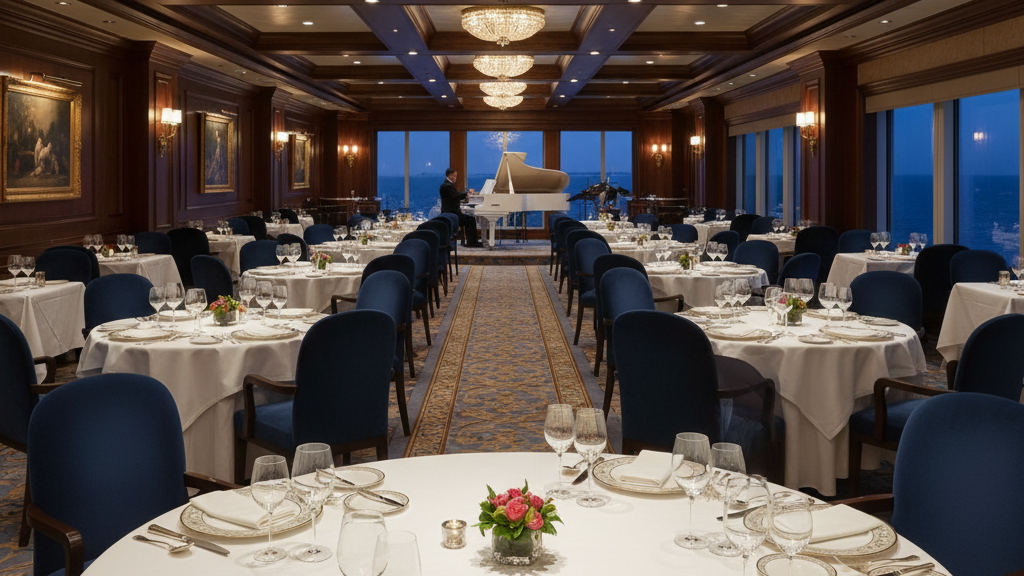
Main dining rooms typically accommodate hundreds to thousands of guests across two or three levels. These elegant spaces feature:
- Multi-Course Service: Appetizer, soup or salad, main course, dessert structure each evening
- Rotating Menus: Different selections nightly on 7-14 day rotation
- Waiter and Sommelier Service: Dedicated staff provide personalized attention
- Complimentary Dining: Included in cruise fare with no additional cost
- Breakfast and Lunch Options: Some ships open main dining rooms for additional meals
The cruise ship dining room atmosphere emphasizes elegance and tradition, with white tablecloths, formal place settings, and attentive service creating a refined experience.
Traditional vs. Anytime Dining
Cruise lines offer two primary dining systems, each with distinct advantages for different travel styles.
Traditional Fixed-Time Dining:
- Choose early seating (5:30-6:30pm) or late seating (7:30-9pm) when booking
- Assigned table for entire cruise (same location, same tablemates)
- Same waitstaff every night (build relationships and rapport)
- Reserved table guaranteed – no waiting
- Pros: Consistency, relationship building with servers, guaranteed seating, traditional cruise experience
- Cons: Less flexibility, must dine at set time, assigned tablemates (could be good or awkward), must coordinate with travel companions
Anytime (Flexible) Dining:
- Arrive when you want within dining hours (typically 5:30-9:30pm)
- No assigned table or tablemates – different each night
- Different servers each visit
- Party seated together but table location varies
- Pros: Complete flexibility, vary dining times nightly, no forced socializing, accommodate shore excursion schedules
- Cons: Potential wait times (15-45 minutes during peak hours), different service each night, no relationship building, may feel less personal
Which to Choose: Traditional dining suits travelers who enjoy routine, appreciate building rapport with servers, and don’t mind fixed schedules. Anytime dining works better for independent travelers, those with varied shore excursion times, and anyone who values flexibility over consistency.
Main Dining Room Etiquette
Understanding cruise ship dining etiquette ensures smooth experiences and respectful interactions:
- Punctuality: Arrive within 15 minutes of reservation time (anytime dining) or assigned seating (traditional)
- Dress Code Compliance: Follow nightly dress codes (casual, smart casual, formal) posted in daily program
- Tipping: Gratuities typically pre-paid or automatically charged ($14-18/day per person) covering dining room staff
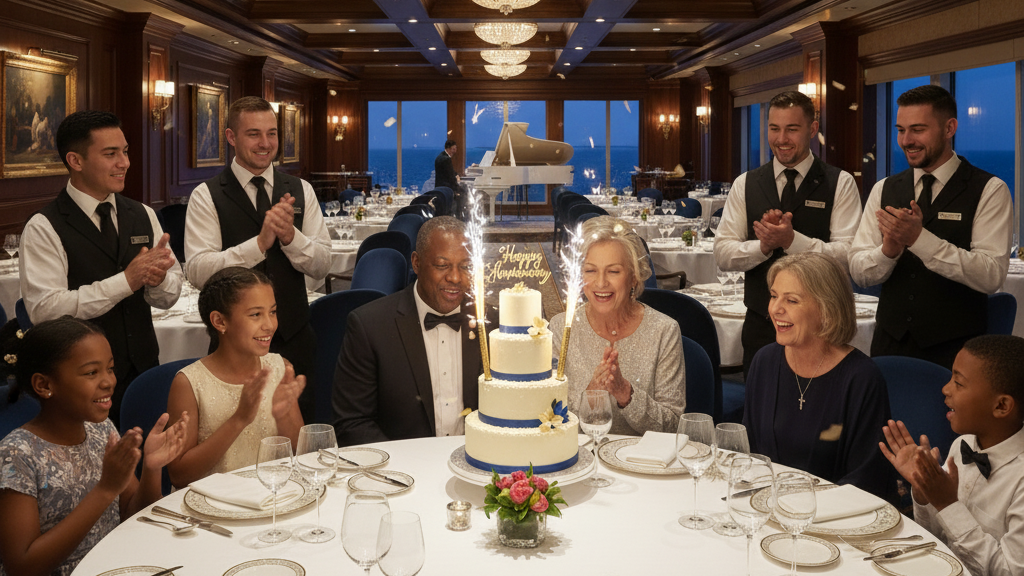
- Special Occasions: Notify maitre d’ or head waiter about birthdays, anniversaries for special recognition
- Dietary Requests: Inform staff of allergies, restrictions, or preferences – chefs accommodate most needs
Maximizing Main Dining Room Experience
Smart cruise ship dining strategies enhance your main dining room experiences:
- Try Multiple Items: Order two appetizers or two desserts – servers accommodate sampling
- Ask for Recommendations: Servers know menu highlights and can suggest based on preferences
- Special Requests: Request off-menu items or modifications – chefs often accommodate
- Build Server Relationships: Learn their names, show appreciation, receive better attention
- Explore Menu Fully: Don’t default to familiar – try new cuisines and preparations
Specialty Restaurants: Premium Dining Options
Specialty restaurants provide elevated cruise ship dining experiences beyond the main dining room, featuring specific cuisines, smaller venues, and higher quality ingredients for additional fees.
Types of Specialty Dining
Italian Restaurants: Most common specialty option, featuring authentic Italian cuisine, wine pairings, and intimate settings. Expect classic dishes like osso buco, handmade pasta, and tiramisu. Cost: $25-40 per person.
Steakhouses: Premium cuts (filet mignon, ribeye, porterhouse), surf-and-turf options, extensive wine lists, and classic sides. These restaurants rival high-end land-based steakhouses. Cost: $40-75 per person.
French Fine Dining: Multi-course tasting menus, wine pairings, classical French techniques, and elegant presentations. Often the most expensive and formal specialty option. Cost: $50-75 per person.
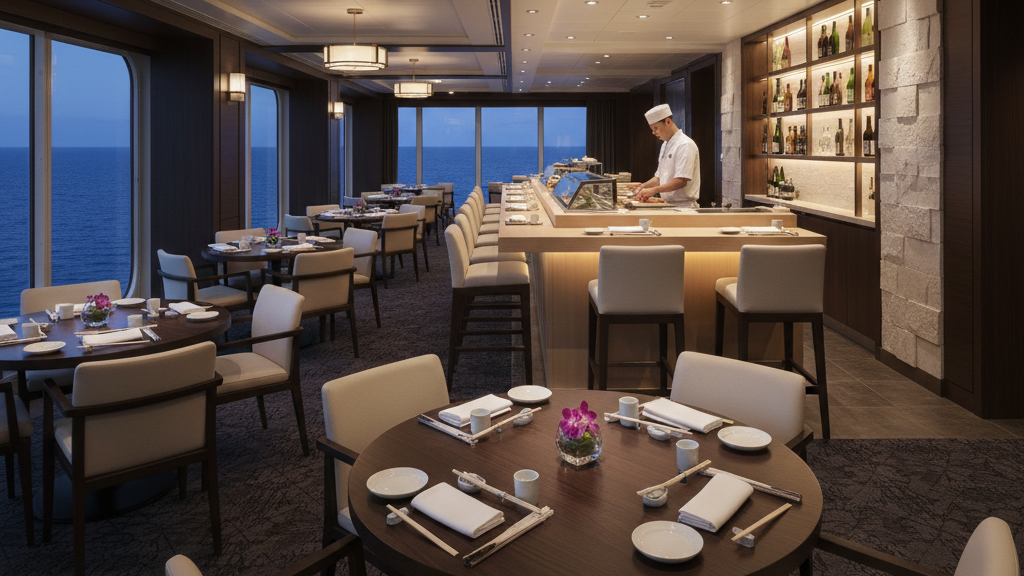
Asian Cuisine: Includes sushi bars, teppanyaki (Japanese hibachi), Pan-Asian fusion, and ramen shops. Teppanyaki offers entertaining chef performances. Cost: $30-50 per person.
Seafood Restaurants: Fresh catches, shellfish towers, lobster, and fish preparations highlighting ocean-to-table concepts. Cost: $35-60 per person.
Chef’s Table Experiences: Exclusive multi-course tasting menus prepared by executive chef, kitchen tours, wine pairings, and intimate settings (typically 8-14 guests). Cost: $75-150 per person.
Cover Charges and Costs
Specialty restaurant pricing varies by cruise line and venue type:
- Mass Market Lines: $25-50 per person for most venues, $50-75 for premium steakhouses
- Premium Lines: $30-60 per person, some included restaurants (Celebrity, Princess)
- Virgin Voyages: All 20+ restaurants included (no upcharges)
- Luxury Lines: All specialty dining included in fare (Oceania, Viking, Regent, Seabourn)
What’s Included in Cover Charge:
- Multi-course meal (appetizer, entree, dessert)
- Table service and reservation
- Enhanced ambiance and smaller venue
Additional Costs:
- Wine and alcoholic beverages (unless beverage package)
- Gratuity (typically 18% added automatically)
- Premium menu items (wagyu beef, lobster) may have supplements
Is Specialty Dining Worth It?
Specialty restaurants deliver higher quality, more intimate atmosphere, and unique experiences beyond main dining rooms. For cruise ship dining enthusiasts, specialty venues offer:
- Quality Advantage: Premium ingredients, specialized chefs, focused menus result in noticeably better food
- Special Occasion Value: Anniversaries, birthdays, romantic dinners benefit from intimate settings
- Variety on Longer Cruises: Week-plus cruises benefit from dining variety beyond main dining room repetition
- Shore Dining Comparison: $50 specialty restaurant compares favorably to $80-120 land-based equivalent
Best Strategy: Try at least one specialty restaurant on cruises 5+ days. Book one or two based on cuisine preferences rather than dining every night in specialty venues.
Booking Specialty Restaurants
Smart booking strategies secure your preferred dining times and venues:
- Pre-Cruise Online Booking: Reserve 30-90 days before sailing for best availability and sometimes pre-cruise discounts
- First Day Onboard: Visit specialty restaurant reservation desk immediately after boarding
- Popular Times Fill Fast: Prime times (7-8pm) and sea day evenings book quickly
- Cancellation Policies: Most allow free cancellation with 24-hour notice – book multiple, cancel extras
- Package Deals: Some lines offer 3-restaurant or 5-restaurant packages at discounted per-meal rates
Casual Dining Venues
Casual cruise ship dining provides convenient, flexible eating options throughout the day without reservations or formality.
Buffet Restaurants
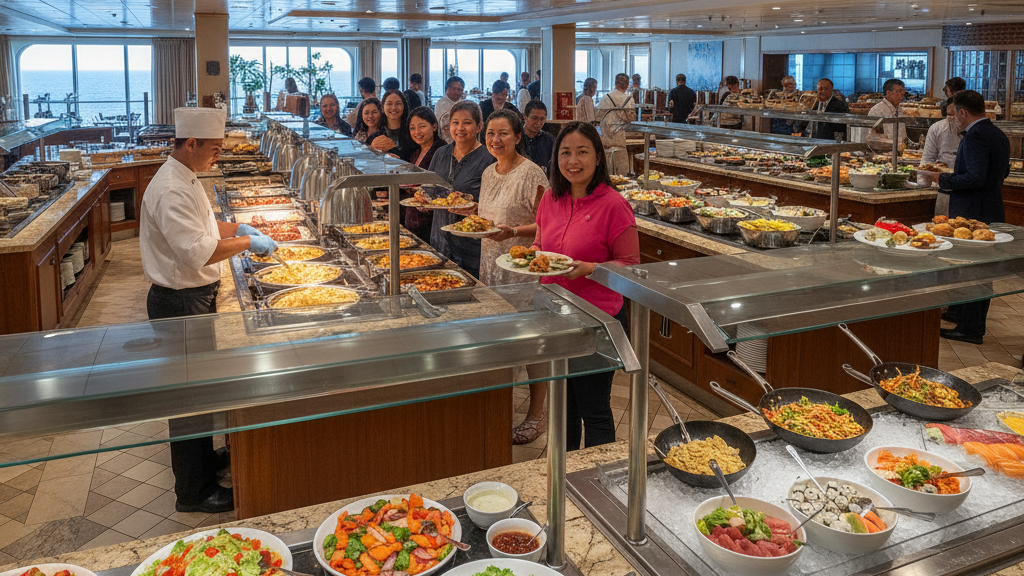
The cruise buffet serves as the most versatile dining venue, offering extensive variety across long operating hours.
- Operating Hours: Typically 6am-midnight with continuous service
- Meal Service: Breakfast (6-11am), lunch (11:30am-3pm), dinner (5-9pm), late-night snacks (10pm-midnight)
- International Variety: Multiple stations with American, Asian, Mediterranean, carved meats, desserts
- Self-Service: Fill your own plate, unlimited returns, eat at your own pace
- Quality Variation: Ranges from excellent (Celebrity, Princess) to adequate (budget lines)
Buffet Strategies:
- Visit off-peak hours (before 8am, after 9:30am for breakfast) to avoid crowds
- Embarkation and debarkation days are busiest – arrive early or late
- Outdoor buffet sections often less crowded than indoor
- Quality better at smaller stations than main buffet lines
Poolside and Deck Dining
Casual outdoor dining venues provide quick bites and relaxed atmospheres:
- Grill Stations: Hamburgers, hot dogs, BBQ chicken, french fries – classic American fare
- Pizza: Available throughout afternoon and evening (11am-midnight typical)
- Deli/Sandwich Shops: Made-to-order sandwiches, wraps, salads
- Ice Cream and Soft-Serve: Complimentary frozen treats throughout the day
- Taco Bars: Build-your-own tacos and burritos (increasingly common)
These venues suit casual lunch on sea days, post-swimming snacks, or quick bites between activities.
24-Hour Dining Options
Round-the-clock cruise ship dining accommodates all schedules:
- 24-Hour Pizza: Hot pizza available anytime on most ships
- Cafe and Coffee Bars: Pastries, sandwiches, coffee (specialty drinks cost extra)
- Late-Night Snacks: Buffet converts to late-night menu (11pm-1am) with comfort foods
- Room Service: Continental breakfast typically free; other meals may have delivery fee ($3-8)
Hidden Dining Gems
Lesser-known cruise ship dining options often provide exceptional experiences:
- Main Dining Room Breakfast: Less crowded than buffet, table service, hot cooked-to-order meals
- Afternoon Tea Service: Traditional tea service (3-5pm) with sandwiches, scones, pastries – often overlooked
- Complimentary Sushi Bars: Some ships offer included sushi (Celebrity, Royal Caribbean on select ships)
- Quiet Breakfast Spots: Specialty restaurants sometimes open for breakfast with smaller crowds
Beverage Programs on Cruise Ships
Understanding beverage inclusions and packages helps manage cruise ship dining costs and maximize value.
What’s Included (All Cruise Lines)
Basic beverages included in cruise fare:
- Coffee and tea (regular, decaf) at buffet and dining rooms
- Water (tap water, not bottled)
- Lemonade and iced tea (non-premium varieties)
- Milk and juice at breakfast
- Select juices at buffet
Beverage Packages Explained
Cruise beverage packages offer unlimited drinks for daily flat rates, providing value for frequent drinkers.
Premium/Deluxe Beverage Packages:
- Cost: $50-80 per person per day (pre-cruise discounts available)
- Includes: Cocktails, beer, wine by the glass, soda, premium coffee, bottled water, fresh juice
- Restrictions: Drinks up to $13-15 per glass (varies by line); higher-priced drinks require upcharge
- Requirement: All adults in cabin must purchase (prevents sharing)
- Gratuity: 18-20% typically added to package price
Does It Save Money?
- Break-even typically 5-6 drinks per day ($60 package ÷ $12 average drink = 5 drinks)
- Heavy drinkers (6+ drinks daily) save money
- Moderate drinkers (3-4 daily) may not benefit
- Calculate based on personal consumption habits
Soda and Non-Alcoholic Packages:
- Cost: $8-15 per person per day
- Includes: Unlimited soda, specialty coffee, bottled water, fresh juice
- Good for non-drinkers who want premium beverages
Coffee Packages:
- Cost: $25-40 per person per cruise
- Includes: Specialty coffee drinks (lattes, cappuccinos, mochas) at cafe
- Pays for itself after 6-8 specialty coffees
Wine and Alcohol Options
Additional cruise ship dining beverage options beyond packages:
- Wine by the Bottle: $25-100+ depending on selection; better value than by-glass ordering
- Bring Your Own: Most lines allow 1-2 bottles wine per person (check policy); corkage fee $15-25 if consumed in restaurants
- Wine Pairing Dinners: Specialty restaurant wine dinners ($50-150) feature multi-course meals with wine pairings
- Wine Packages: Some lines offer wine bottles packages (3, 5, or 7 bottles) at discount
Special Dietary Needs and Cruise Ship Dining
Cruise lines accommodate various dietary restrictions and preferences with proper advance notification.
Common Dietary Accommodations
- Vegetarian and Vegan: Dedicated menu sections in main dining room, clearly marked buffet items
- Gluten-Free: Separate gluten-free menus, bread, pasta available; notify dining staff first night
- Kosher and Halal: Advance notice required (60+ days); prepared in separate facilities, sealed packaging
- Food Allergies: Detailed allergy sheets completed first night; chefs prepare allergen-free meals
- Diabetic-Friendly: Sugar-free desserts, carb information provided, portion control assistance
Communicating Dietary Needs
Effective communication ensures your dietary requirements are met:
- Pre-Cruise Notification: Note dietary needs when booking or in guest information (30+ days before sailing)
- First Night Meeting: Request meeting with maitre d’ or head waiter to discuss requirements
- Daily Communication: Speak with servers each evening about next day’s menu options
- Chef Consultation: Request to speak with chef for complex requirements or multiple allergies
- Written Documentation: Bring allergy cards or medical documentation for serious restrictions
Quality of Dietary Accommodations
Dietary accommodation quality varies by cruise line:
- Luxury Lines Excel: Oceania, Viking, Regent, Seabourn provide exceptional accommodations with advance notice
- Premium Lines Strong: Celebrity, Princess, Holland America handle restrictions well
- Mass Market Improving: Royal Caribbean, Norwegian, Carnival have improved significantly but simpler requests work better
- Specialty Restaurants: May have less flexibility than main dining room due to focused menus
Cruise Ship Dining Strategies and Tips
Maximizing Dining Value
- Try Everything Included First: Explore all complimentary options before paying for specialty dining
- Specialty Dining for Special Occasions: Save upcharges for anniversary dinners or celebration meals
- Happy Hour Specials: Many bars offer 2-for-1 drinks or discounted prices (5-7pm typically)
- Room Service for Breakfast: Continental breakfast often complimentary – enjoy privacy on balcony
- Beverage Package Early Booking: Purchase packages before cruise (often 10-25% discount)
Avoiding Dining Crowds
- Off-Peak Meal Times: Breakfast before 7:30am or after 9am; dinner before 6pm or after 8:30pm
- Port Days Less Crowded: Many passengers eat ashore; onboard dining less hectic
- Alternative Venues: Try main dining room for breakfast instead of packed buffet
- Make Reservations: Specialty and anytime dining reservations avoid waits
Special Occasions and Celebrations
- Notify Staff in Advance: Tell maitre d’, head waiter, or guest services about birthdays, anniversaries
- Cake and Champagne: Request celebration cake ($25-50) or bring champagne (corkage fee applies)
- Private Dining: Some ships offer private dining room bookings for groups
- Surprise Arrangements: Coordinate with dining staff for special surprises for travel companions
Related Resources
Enhance your cruise ship dining knowledge with these complementary guides:
- Cruise Line Comparison Guide: Compare dining quality, specialty restaurants, and inclusions across different cruise brands
- Cruise Packing Complete Guide: Pack appropriate attire for formal nights and specialty restaurant dress codes
- All-Inclusive Travel Guide: Compare cruise dining to resort all-inclusive meal programs
Frequently Asked Questions About Cruise Ship Dining
Do I need reservations for cruise ship dining?
Main dining rooms require reservations only for anytime dining (make morning of or day before). Specialty restaurants require advance reservations (book pre-cruise online or first day onboard). Buffets and casual venues never require reservations. Book popular specialty restaurants and prime times early to avoid disappointment.
What’s included in cruise dining?
All cruise fares include main dining room meals (breakfast, lunch, dinner), buffet access, casual dining venues (pizza, grill, deli), room service (continental breakfast), basic beverages (coffee, tea, water, juice), and most entertainment. Specialty restaurants ($25-75), alcoholic drinks, premium coffee, soda, and gratuities cost extra unless you have packages or sail luxury lines.
Can I eat whenever I want on a cruise?
It depends on dining system choice. Anytime (flexible) dining allows you to eat when you want within dining room hours (5:30-9:30pm typically). Traditional dining requires showing up at assigned time (early or late seating). Buffets, casual venues, and 24-hour options provide maximum flexibility. Norwegian’s “Freestyle Cruising” offers the most flexible cruise ship dining schedule.
Are specialty restaurants worth the extra cost?
For most cruisers, trying at least one specialty restaurant on cruises 5+ days provides worthwhile variety and elevated quality. The $40-60 per person cost delivers significantly better food than main dining room and compares favorably to $80-120 equivalent land-based restaurants. Book one or two based on cuisine preferences rather than dining exclusively in specialty venues.
How do I handle dietary restrictions on a cruise?
Notify the cruise line when booking (30+ days advance) and request a meeting with the maitre d’ or head waiter first evening onboard. Complete detailed allergy/dietary sheets and discuss needs daily with servers. Cruise lines accommodate vegetarian, vegan, gluten-free, kosher, halal, and allergy requirements with proper advance notice. Luxury and premium lines excel at accommodations; mass market lines handle simpler requests better.
Can I get room service anytime?
Most cruise lines offer 24-hour room service, though continental breakfast is typically the only complimentary option. Other room service meals may incur delivery fees ($3-8 per order). Luxury lines (Regent, Seabourn, Oceania) include complimentary room service for all meals. Menu selections for room service are more limited than restaurant dining options.
Conclusion: Making the Most of Cruise Ship Dining
Cruise ship dining stands as a vacation highlight, offering incredible variety from formal multi-course dinners to casual poolside snacks. Understanding the dining systems – traditional versus anytime, included versus specialty, beverage packages versus pay-per-drink – helps you maximize both culinary experiences and value. Plan ahead by booking specialty restaurants early, communicating dietary needs proactively, and trying diverse venues beyond your comfort zone. With proper planning and smart strategies, cruise ship dining delivers exceptional variety and quality that rivals or exceeds land-based vacations.
External Resources:
- CDC Cruise Ship Food Safety: https://www.cdc.gov/nceh/vsp
- Cruise Line International Association: https://cruising.org
- USDA Food Safety: https://www.fsis.usda.gov/food-safety