
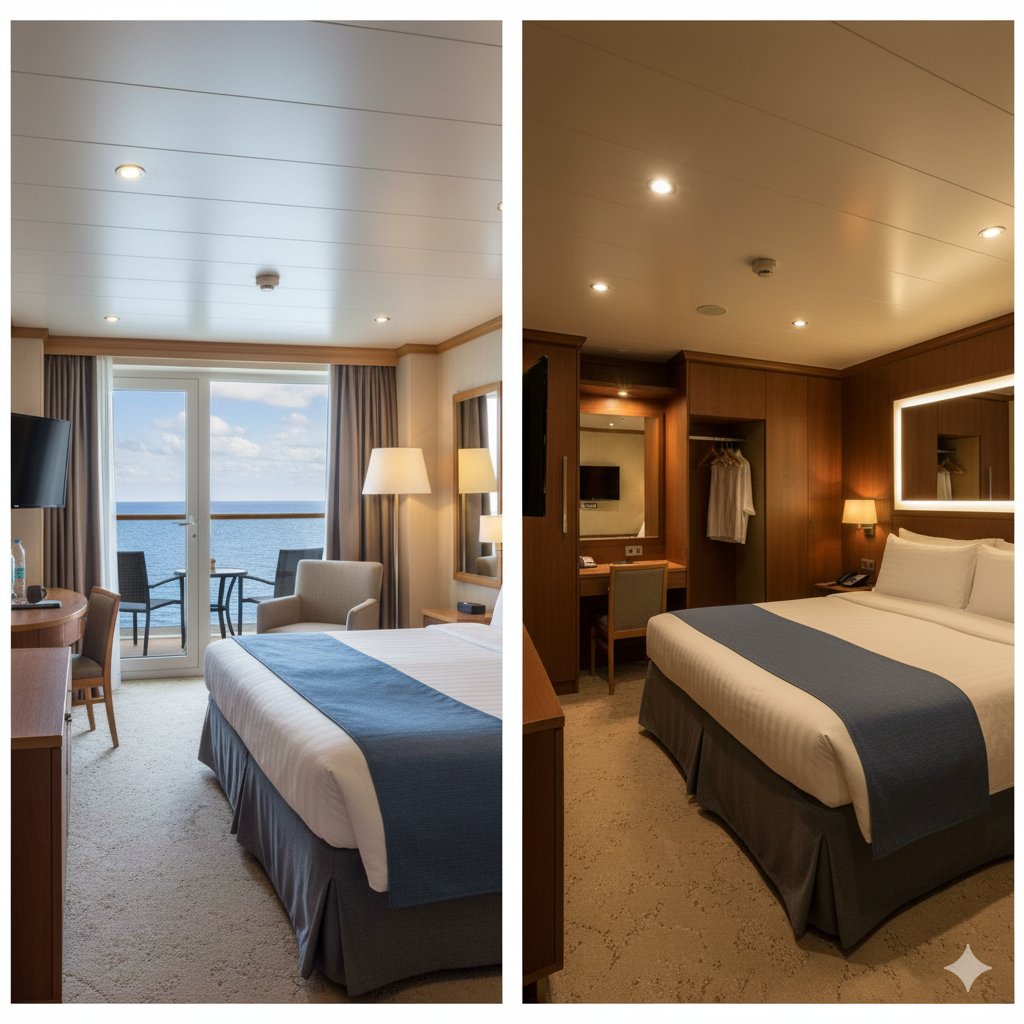
Your cabin choice impacts your entire cruise experience—and your budget. The difference between cabin categories can mean hundreds or even thousands of dollars, but also dramatically different comfort levels and enjoyment throughout your voyage.
Understanding cruise ship cabin types helps you make the best decision for your travel style, budget, and priorities. Whether you’re a couple seeking romance, solo traveler watching expenses, or group of friends wanting connecting rooms, the right cabin makes all the difference.
This comprehensive guide breaks down every cabin category, explaining what you get, who should book each type, and exactly how to choose the perfect stateroom for your cruise vacation.
Table of Contents
Inside Cabins: Budget-Friendly Sleeping Quarters
What Are Inside Cabins?
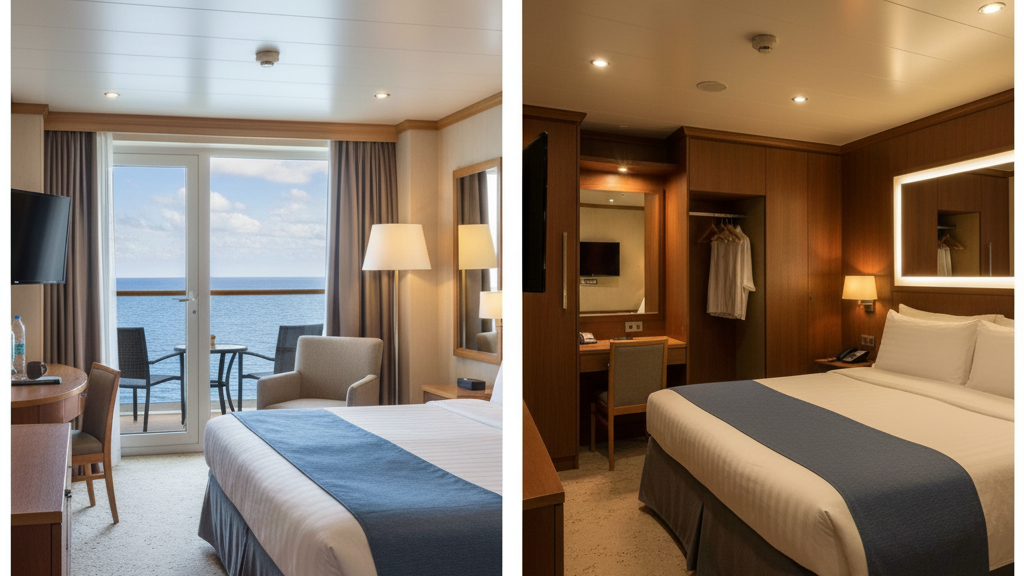
Inside cabins (also called interior or inside staterooms) have no windows or natural light. They’re typically the smallest accommodations on the ship, ranging from 150-185 square feet—about the size of a small hotel room.
Standard Features:
- Queen or two twin beds (usually convertible)
- Private bathroom with shower
- Small desk or vanity area
- Closet and storage drawers
- TV, phone, safe
- Mini refrigerator (on most ships)
- Electrical outlets (limited)
You get everything except a window. The room is fully functional for sleeping, showering, and storing belongings—just no view or natural light.
Who Should Book Inside Cabins?
Perfect For:
- Budget-conscious travelers maximizing value
- People who only use cabins for sleeping and showering
- Cruisers who plan to spend days exploring ship and ports
- Solo travelers finding affordable rates
- Those who sleep better in complete darkness
- Travelers not affected by lack of natural light
Not Ideal For:
- Anyone prone to claustrophobia
- Those who enjoy morning coffee in room with views
- Couples wanting romantic atmosphere
- People who lose track of time without natural light
- Anyone planning significant time in cabin
Inside Cabin Pros
Significant Cost Savings: Inside cabins cost $500-1,500 less than balcony cabins on typical week-long cruises. This money can upgrade other aspects of your vacation—specialty dining, excursions, or save for your next cruise.
Very Dark for Sleeping: Blackout darkness helps some people sleep better. No sunrise waking you at 6am. Perfect for night owls.
Same Ship Access: Your cabin category doesn’t limit ship access. You enjoy the same pools, restaurants, entertainment, and activities as suite passengers.
Often Midship Location: Many inside cabins sit midship where motion is minimal—a big plus for those worried about seasickness.
Inside Cabin Cons
No Natural Light or Views: You can’t see outside, check weather, or enjoy ocean views from your room. Some find this disorienting.
Can Feel Claustrophobic: Without windows, small inside cabins feel smaller than they are. Extended time in cabin can feel confining.
Difficult to Tell Time: Without natural light cues, you might sleep through alarms or lose track of time. Set multiple alarms.
Smallest Accommodations: Inside cabins are the smallest category, though size varies by cruise line and ship age.
Inside Cabin Tips
- Request higher decks for less engine noise and vibration
- Bring nightlight for bathroom trips in complete darkness
- Set phone alarms since natural light won’t wake you
- Spend time in public areas to avoid feeling confined
- Choose midship location for least motion
- Some cruise lines offer “virtual balconies” in select inside cabins—floor-to-ceiling screens showing real-time ocean views
The Bottom Line: Inside cabins make perfect sense if you’re budget-focused and plan to spend minimal time in your cabin. The savings can be substantial for identical ship experiences.
Oceanview Cabins: Natural Light and Views
What Are Oceanview Cabins?
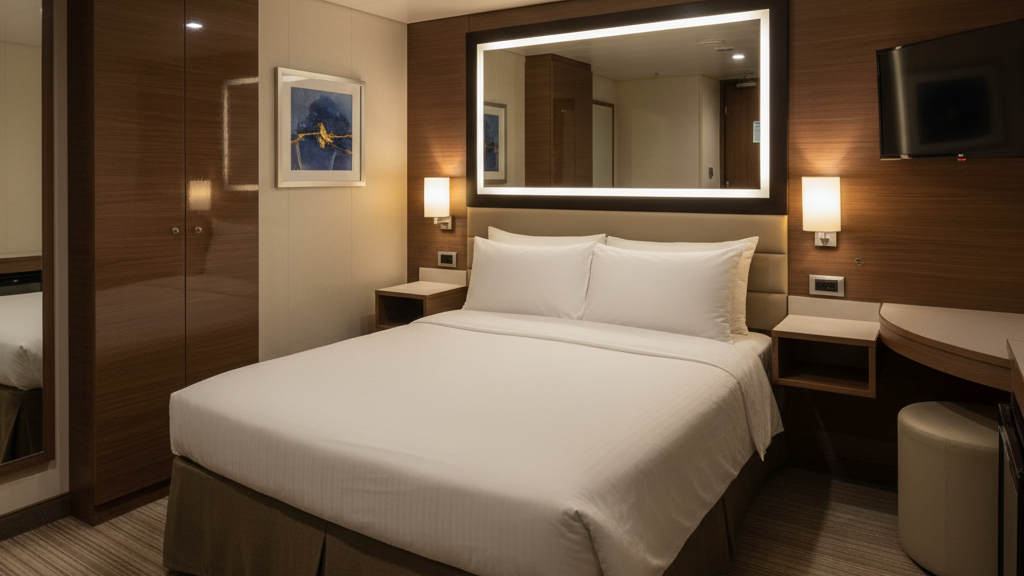
Oceanview cabins (also called outside or exterior cabins) feature a window or porthole allowing natural light and outside views. Typically 160-200 square feet—slightly larger than inside cabins.
Window Types:
- Porthole: Small, round ship window (usually can’t open)
- Picture Window: Larger rectangular window (doesn’t open)
- Obstructed View: Windows partially blocked by lifeboats or ship structure (cheaper)
Windows don’t open, so you can’t feel ocean breeze or hear waves—just see outside. You’re essentially paying for the view and natural light.
Who Should Book Oceanview Cabins?
Best For:
- Travelers wanting natural light but not needing outdoor space
- Couples on moderate budgets seeking compromise between inside and balcony
- First-time cruisers unsure if they need a balcony
- Those who enjoy waking to natural light
- Travelers who want to see weather and ports from cabin
- Anyone who feels confined without windows
Consider Alternatives If:
- You want fresh air and outdoor space—upgrade to balcony
- Budget is very tight—inside cabins save more money
- You’re primarily paying for views—balconies offer much better value
Oceanview Cabin Pros
Natural Light Transforms Cabin Feel: Windows make rooms feel more spacious and welcoming. You can tell time of day and weather without leaving your cabin.
Views of Ocean and Ports: Watch ocean pass by, see ports as you sail in/out, enjoy sunrises and sunsets from bed.
Moderate Pricing: Cost less than balconies while providing window benefits. Typically $200-600 more than inside cabins.
Slightly Larger: Most oceanview cabins offer a bit more square footage than inside cabins.
Oceanview Cabin Cons
Can’t Step Outside: You see the ocean but can’t enjoy fresh air or outdoor seating. For slightly more money, balconies provide this.
Obstructed Views Common: Many oceanview cabins have partially blocked windows (lifeboats, ship structure). Check deck plans carefully.
Windows Don’t Open: No ocean breeze or sounds—just visual connection to outside.
Awkward Value Proposition: Oceanviews often cost only $20-40 per night more than inside cabins but $40-60 per night less than balconies. For the small upcharge, many travelers prefer balconies.
Oceanview Cabin Tips
- Carefully verify view type when booking—”obstructed” means partially blocked windows
- Higher decks generally have better, less obstructed views
- Aft (rear) oceanview cabins sometimes offer larger windows
- Forward-facing cabins provide dramatic bow views
- If balcony is only $10-15 per night more, strongly consider the upgrade
The Bottom Line: Oceanview cabins occupy an awkward middle ground. They’re fine choices but many cruisers feel balconies offer better value for slightly more money.
Balcony Cabins: The Sweet Spot for Most Cruisers
What Are Balcony Cabins?
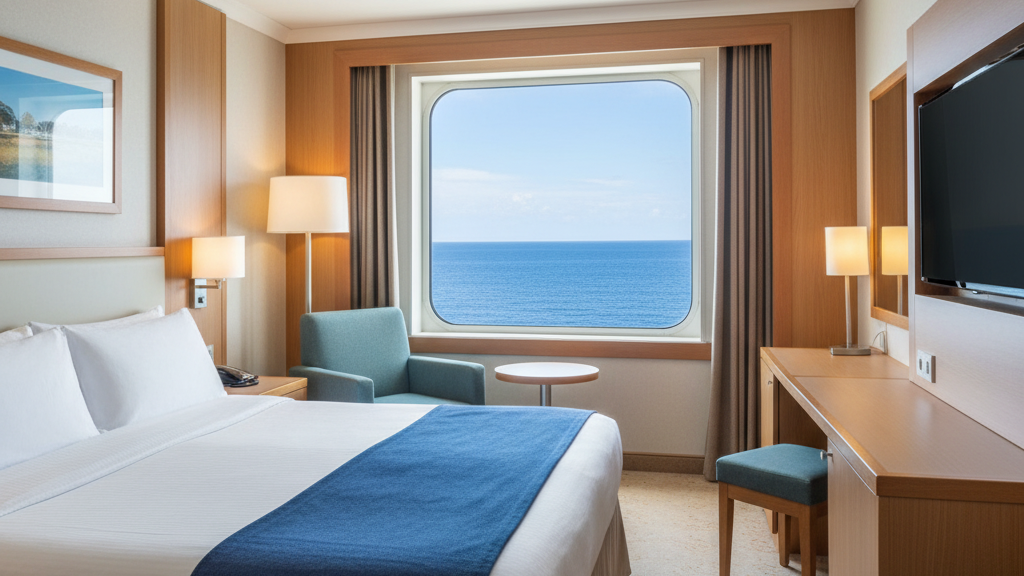
Balcony cabins (also called veranda cabins) feature private outdoor space accessible through sliding glass doors. Interior space typically 180-250 square feet plus 40-80 square foot balcony.
Balcony Features:
- Two chairs and small table (standard)
- Privacy dividers between neighboring balconies
- Sliding glass door from cabin
- Railing (glass or metal) for safety and views
- Some include loungers or love seats
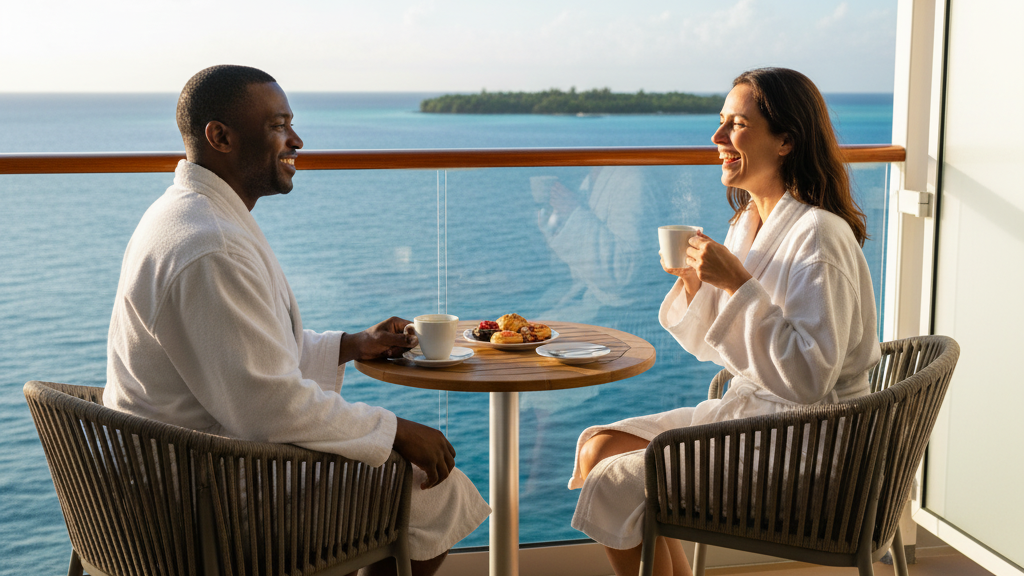
Your own private outdoor retreat with ocean views, fresh air, and space to relax whenever you want.
Who Should Book Balcony Cabins?
Perfect For:
- Couples seeking romance and privacy
- Anyone cruising Alaska or scenic routes (balcony essential for glaciers and fjords)
- Travelers who enjoy morning coffee or evening cocktails outdoors
- Those wanting personal outdoor space
- Cruisers on week-long or longer sailings (more time to use balcony)
- Anyone booking Caribbean or warm-weather cruises
Maybe Skip If:
- Very tight budget (inside cabins save significantly)
- Short 3-4 day cruise (less time to use balcony)
- You never sit on balconies at hotels
- Repositioning cruise with many sea days but cool weather
Balcony Cabin Pros
Private Outdoor Space: Your personal deck for sunrise coffee, afternoon reading, evening stargazing, or romantic moments. No crowds, no saving chairs, no fighting for space.
Fresh Air Anytime: Open sliding door for ocean breeze without leaving your cabin. Perfect for napping with fresh air or working with natural ventilation.
Dramatically Better Views: Unobstructed panoramic ocean views. Watch ports approach, see dolphins and whales, enjoy sunrises and sunsets in privacy.
Cabin Feels Much Larger: Sliding door and balcony access make cabin feel twice as spacious. Natural light and outdoor connection enhance ambiance.
You’ll Use It More Than Expected: Most first-time balcony bookers report using it daily—often multiple times per day. Morning coffee, after-dinner drinks, reading, napping, romantic moments.
Excellent Value for Money: The upgrade cost ($300-800 more than inside cabins) provides tremendous value in enhanced experience.
Balcony Cabin Cons
Price Premium: Balconies cost significantly more than inside and oceanview cabins. Budget carefully.
Balcony Size Varies Greatly: Some balconies are spacious (80+ sq ft), others cramped (barely fit two chairs). Check ship deck plans.
Weather Can Limit Use: Wind, rain, or cool temperatures reduce balcony appeal. Still worth having, just may not use daily in bad weather.
Occasional Noise: Neighboring balcony conversations sometimes carry over dividers. Rare but happens.
Balcony Cabin Tips
- Midship balconies offer least motion—best for those prone to seasickness
- Higher decks provide better views but can be windier
- Aft (rear) cabins often feature larger, wrap-around balconies
- Corner cabins sometimes have extended L-shaped or wrap-around balconies
- Check actual balcony size on deck plans—they vary dramatically
- Avoid balconies directly below outdoor dining or pool areas (drips and noise)
- Request higher deck balconies for views over lifeboats
- Book early for best balcony selection
The Bottom Line: Balcony cabins represent the sweet spot for most cruisers—significant upgrade in experience for manageable additional cost. The private outdoor space transforms your cruise experience.
Suites: Ultimate Space and Luxury
What Are Suite Cabins?
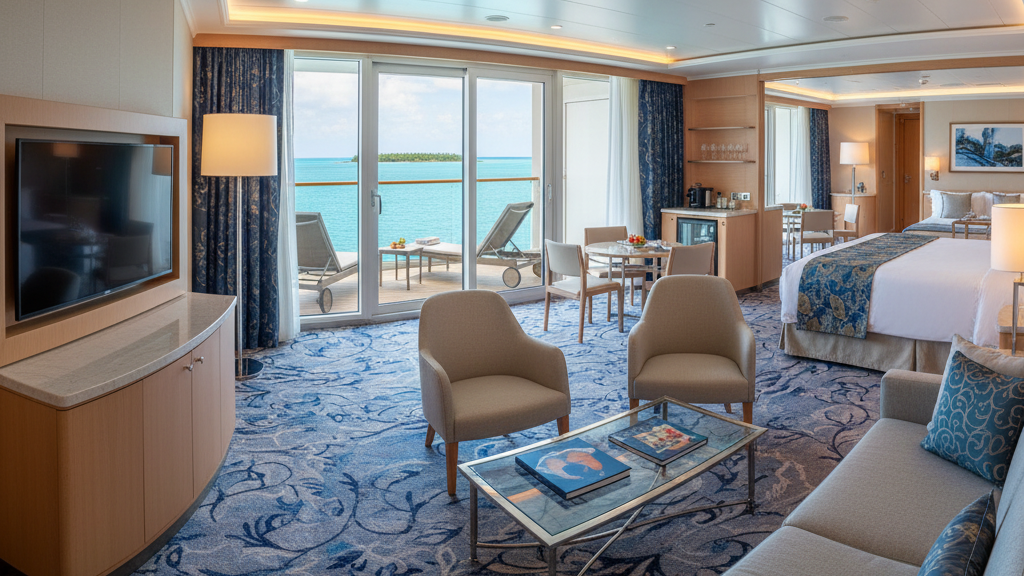
Suites offer significantly more space (300-1,400+ square feet) with luxury amenities and exclusive perks. These are the premium accommodations with extra benefits beyond just size.
Suite Features Vary by Level, But Typically Include:
- Separate living and sleeping areas
- Larger balconies (often with loungers and upgraded furniture)
- Premium bath amenities and robes
- Walk-in closets or expanded storage
- Larger TVs and upgraded entertainment
- Mini-bars (stocked or unstocked depending on line)
- Luxury bedding and pillows
Suite Perks Often Include:
- Priority boarding and disembarkation
- Concierge or butler service (on luxury lines)
- Access to exclusive suite lounges and sun decks
- Complimentary specialty dining
- Premium beverage packages included
- Priority spa, restaurant, and shore excursion booking
- Complimentary laundry service
- Welcome champagne and treats
Suite Categories
Junior Suites: Entry-level suites (300-400 sq ft) with some perks. Often just larger balcony cabins with sitting areas. Good value for those wanting more space without full suite pricing.
Standard Suites: Distinct living rooms separated from bedrooms (400-600 sq ft). Full suite perks usually begin at this level. Large balconies.
Deluxe/Premium Suites: Significantly larger (600-900 sq ft) with enhanced amenities. Multiple bathrooms common. Butler service often included.
Penthouse/Owner’s Suites: Top-tier accommodations (900-1,400+ sq ft). Master bedrooms, spacious living areas, enormous balconies, full butler service, ultimate perks.
Who Should Book Suites?
Perfect For:
- Luxury travelers wanting premium experiences
- Special occasions (honeymoons, anniversaries, milestone birthdays)
- Those who value space and comfort highly
- Travelers wanting VIP treatment and exclusive access
- Couples or solo travelers who want to spread out
- Anyone who can comfortably afford the premium
Consider Carefully If:
- Budget is a major concern (suites cost 2-5x balcony prices)
- Short cruise where you won’t fully appreciate the space
- You typically spend little time in hotel rooms
- The money could better be spent on excursions or extending your trip
Suite Pros
Exceptional Space: Room to move around, entertain in cabin, not feel cramped. Makes week-long cruises significantly more comfortable.
Exclusive Perks: Priority everything, dedicated service, access to exclusive areas. You’re treated as VIP throughout the ship.
Large Balconies: Suite balconies often include loungers, tables, and room for private dining or entertaining.
Enhanced Service: Concierge or butler service anticipates needs, handles reservations, provides elevated attention.
Worth It for Special Occasions: Honeymoons, anniversaries, and milestone celebrations justify suite splurges.
Suite Cons
Substantial Price Premium: Suites cost 2-5x balcony cabin prices. For week-long cruise, this means $2,000-10,000+ additional cost.
May Exceed Needs: Most cruisers don’t need suite-level space or amenities. Comfortable cruising happens in standard cabins.
High Expectations: At suite prices, expectations rise. Any service issues feel more disappointing.
Suite Tips
- Compare suite pricing across cruise lines—some offer better suite value than others
- Junior suites provide taste of suite experience at lower price point
- Last-minute upgrade offers sometimes available—ask at booking
- Suite benefits vary by cruise line—research what each line includes
- Midship suites offer stability advantages over forward or aft
- Consider booking suite for special occasions but standard cabins for regular cruises
The Bottom Line: Suites provide ultimate cruise comfort and luxury. Worth it for special occasions or travelers who highly value space and VIP treatment. For most cruisers, balcony cabins offer better value.
Special Cabin Categories / Cruise Ship Cabin Types
Solo Cabins (Studio Cabins)
Some cruise lines now offer cabins designed specifically for solo travelers, eliminating or reducing the dreaded “single supplement.”
Features: Smaller cabins (80-150 sq ft) designed efficiently for one person. Some include access to exclusive solo traveler lounges for socializing.
Who It’s For: Solo travelers tired of paying double occupancy rates. Those comfortable in compact spaces who want to meet other solo cruisers.
Availability: Limited to select cruise lines (Norwegian, Royal Caribbean on select ships). Book early—these sell out quickly.
Connecting Cabins
Two cabins with interior door connecting them, creating one larger space.
Who It’s For: Groups of friends wanting proximity with flexibility, couples wanting separate sleeping spaces, or those traveling with another couple.
Tips: Request connecting rooms at booking. Availability is limited. If you book two random cabins, you likely won’t get connecting ones.
Accessible Cabins
ADA-compliant cabins with wider doors, roll-in showers, grab bars, and wheelchair turning radius.
Who It’s For: Travelers with mobility challenges or disabilities. Also valuable for anyone who appreciates extra space and accessibility features.
Benefit: Often more spacious than standard cabins in same category.
Cabin Location Matters As Much As Category
Forward vs. Midship vs. Aft
Midship (Middle of Ship): Least motion, most stable, most convenient to elevators and amenities. Typically most expensive within each category.
Forward (Front): More pitch (up and down motion). Can be quieter. Some enjoy bow views. Usually less expensive.
Aft (Rear): Some roll and sway. Often features larger, wrap-around balconies. Views of ship’s wake. Less expensive than midship.
Deck Height
Lower Decks: Less motion, closer to dining rooms, less expensive. Potential for more noise from public spaces. Views may be blocked by lifeboats.
Middle Decks: Good balance of accessibility and views. Moderate pricing.
Upper Decks: Best views, closer to pools and sun decks, more motion in rough seas, longer elevator waits. More expensive.
Things to Avoid
- Cabins directly above or below nightclubs, theaters, or gyms (noise and vibration)
- Cabins near elevator lobbies (constant foot traffic and door sounds)
- Cabins on decks with public spaces above/below your sleeping hours
- Forward cabins if you’re prone to motion sickness
- Cabins near anchor (noise when dropping anchor in ports)
How to Choose Your Perfect Cabin
Step 1: Determine Your Budget
Be realistic about what you can afford, including the additional cruise expenses beyond base fare. Stretching budget for suite you can’t afford diminishes overall vacation quality.
Step 2: Consider Your Cabin Usage
How much time will you actually spend in your cabin? If you’re an early riser who stays busy until late, inside cabins make sense. If you enjoy relaxing in your room, upgrade to balcony or suite.
Step 3: Factor in Cruise Length
Short 3-4 day cruises: Inside or oceanview cabins work fine—limited time to use balconies. Week-long or longer: Balconies or suites provide better value—you’ll appreciate the space and amenities over longer periods.
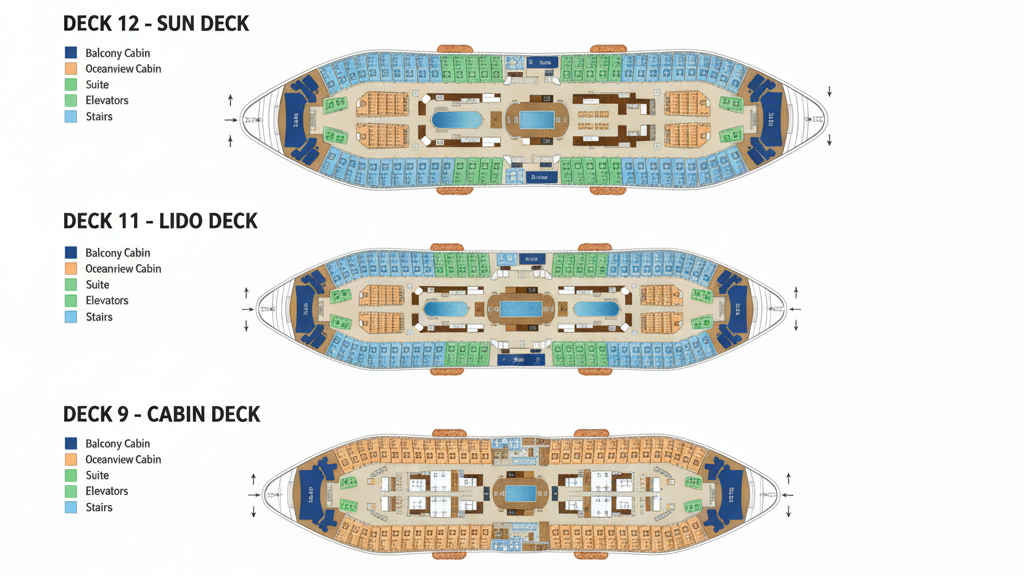
Step 4: Research Your Ship’s Deck Plans
Study deck plans carefully before booking:
- Verify cabin location relative to public spaces
- Check for obstructions (lifeboats blocking views)
- Confirm balcony size if booking balcony cabin
- Identify noise sources (nightclubs, theaters, pools)
- Compare cabins within your chosen category
Step 5: Book Early for Best Selection
Prime cabins (midship balconies, suites, solo cabins) sell out first. Book 6-12 months ahead for best selection and pricing.
Step 6: Don’t Overthink It
While cabin matters, you’ll spend most time exploring the ship, ports, and activities. Any cabin on any ship gets you the cruise experience. Don’t let analysis paralysis prevent you from booking.
Final Thoughts: Finding Your Perfect Cabin
There’s no universally “best” cabin category—only the best cabin for your needs, budget, and preferences.
Quick Decision Guide:
- Budget Priority: Inside cabin, midship, lower deck
- Best Value: Balcony cabin, midship, middle deck
- Romance and Privacy: Balcony or suite
- Scenic Cruises (Alaska, Norway): Balcony essential
- Special Occasions: Suite
- Solo Travelers: Solo/studio cabin if available, otherwise inside cabin
- First-Time Cruisers: Balcony cabin (best experience for the money)
Your cabin is your cruise home base. Choose wisely based on your priorities, and you’ll maximize your vacation enjoyment from the moment you step onboard until disembarkation day.
Ready to book your cruise? Check our [Complete Cruise Planning Guide] for everything you need to know about choosing your perfect cruise vacation.
Related Resources:
- First Time Cruise Tips: What the Glossy Brochures Won’t Tell You
- First-Time Cruiser Mistakes: What to Avoid Before and After You Board
- Cruise Costs Guide: What a Cruise Actually Costs (With Real Numbers)
- Shore Excursions Guide: Cruise Line vs. Independent — What’s Actually Worth It
External Resources: