
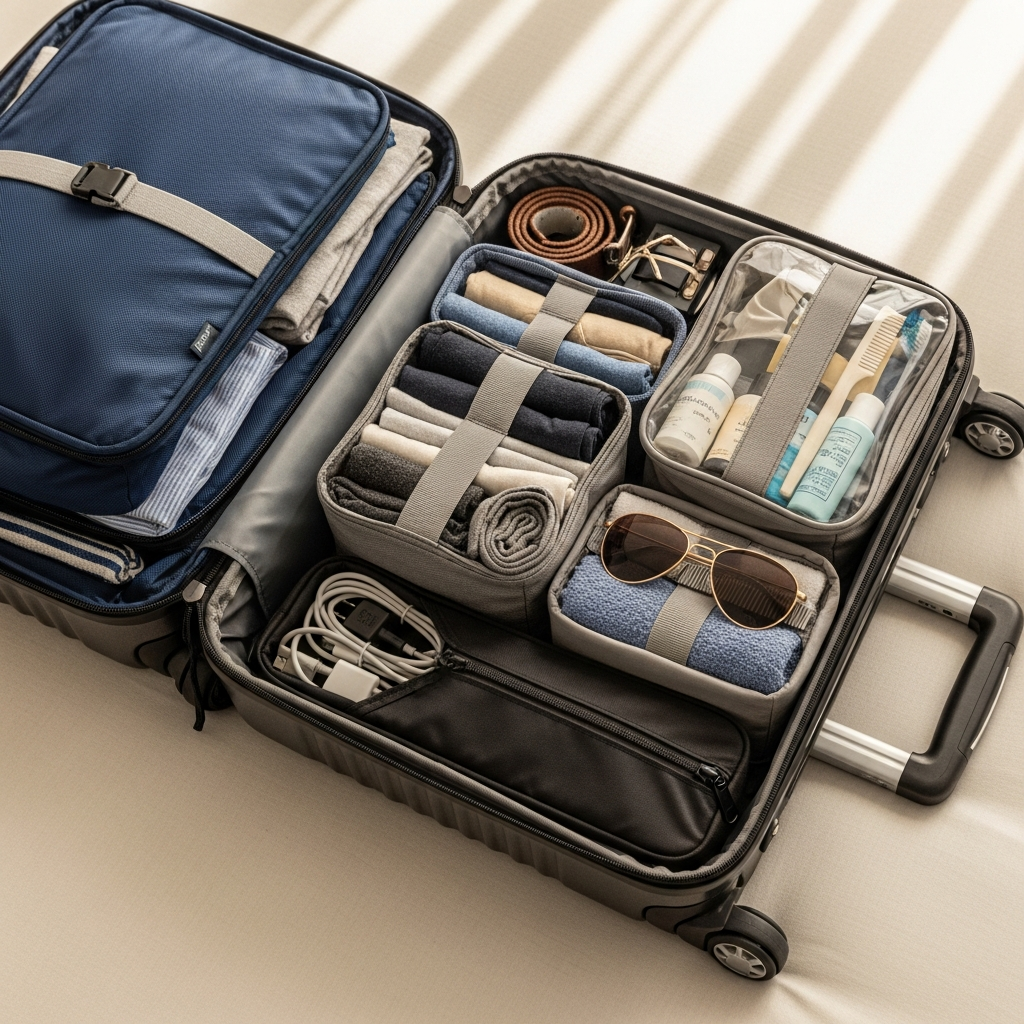
You’re about to overpack for your cruise. Almost every first-time cruiser does — stuffing suitcases with hair dryers, beach towels, full-size shampoo bottles, and enough outfits to dress a small village. Here’s the truth: cruise ships are floating hotels with housekeeping, restaurants, shops, and amenities you’d never think to pack for. This cruise packing guide will show you exactly what to bring, what to leave home, and how to pack efficiently so your vacation starts the moment you board — not at baggage claim.
Whether you’re heading to the Caribbean, Alaska, or the Mediterranean, the principles of smart cruise packing remain the same. Pack less than you think you need, organize what you do bring, and let the ship do the heavy lifting.
The Psychology of Packing: Why We Overpack
Fear drives most packing decisions. “What if I need this?” becomes the mantra that fills our suitcases with items we’ll never use.
Unfamiliarity with your destination amplifies overpacking. When you don’t know what to expect, you prepare for every possible scenario.
Lack of packing experience creates inefficiency. Travelers default to “better safe than sorry,” packing duplicates and just-in-case items that rarely see daylight.
Benefits of Packing Light
- Mobility and flexibility transform when you pack light, navigating stairs, and move between destinations with ease.
- Avoiding checked bag fees saves $30-70 per flight each way.
- Lighter bags mean less physical strain and more energy for actual travel experiences.
- Faster movement through airports and train stations makes tight connections manageable. When you can carry everything yourself, you control your pace and don’t depend on baggage handlers or claim carousels.
Quick Takeaways:
- Cruise ships provide hair dryers, beach towels (for onboard use), shampoo, and conditioner — don’t pack them
- Pack one formal outfit per formal night (most 7-day cruises have 1-2 formal nights)
- Packing cubes are essential — your cabin has limited storage and no dresser drawers in many categories
- Keep medications, documents, valuables, and one outfit change in your carry-on — checked bags arrive hours after you board
- Reef-safe sunscreen is required on many cruise lines — bring your own, it’s cheaper than the ship store
- Lay out everything you think you need, then remove 20-30% before packing
Table of Contents
Why Cruise Packing Is Different (And Why Most Guides Get It Wrong)
Most generic packing guides miss the specific reality of cruise travel. Your cabin is smaller than a hotel room but comes with a closet, under-bed storage, and bathroom amenities. You’re visiting multiple destinations in one trip, which means your wardrobe needs to work for pool days, port excursions, casual dinners, and formal nights — all within the same suitcase.
Understanding why travelers overpack is the first step to packing smarter. Fear drives most packing decisions. “What if I need this?” becomes the mantra that fills suitcases with items that never leave the cabin. On a cruise especially, this anxiety is misplaced — if you forget something, the ship’s store or the next port town almost certainly has it.
What Cruise Ships Already Provide (Don’t Pack These)
Shampoo, conditioner, and body wash are standard in every cabin. Check your specific cruise line, but nearly all major lines provide these. You might prefer your own products, and that’s fine — but don’t pack full-size bottles when travel-size will do.
Hair dryers appear in virtually every cruise cabin. Skip packing this bulky item unless you have specific styling needs requiring a professional-grade tool.
Beach towels are provided for pool and deck use. You’ll check them out from a pool towel station using your cruise card. Note: these are for onboard use — most cruise lines charge a fee if you take them ashore.
Basic toiletries including soap and sometimes lotion are replenished daily by your cabin steward. You’ll also find ice buckets, extra blankets and pillows on request, and in-cabin safes for valuables.
The Carry-On Versus Checked Bag Problem on Cruises
Here’s what nobody tells first-time cruisers: when you hand your luggage to the porter at embarkation, it may not arrive at your cabin until late afternoon — sometimes evening. You’ll board the ship at 11am or noon with nothing but your carry-on bag for potentially six or more hours.
Your carry-on should contain everything you need for that first day: swimsuit, cover-up, sunscreen, medications, phone charger, all documents, and one change of clothes. Pack it as if your checked bag might not arrive until tomorrow — because occasionally, it doesn’t.
Choosing the Right Luggage for a Cruise
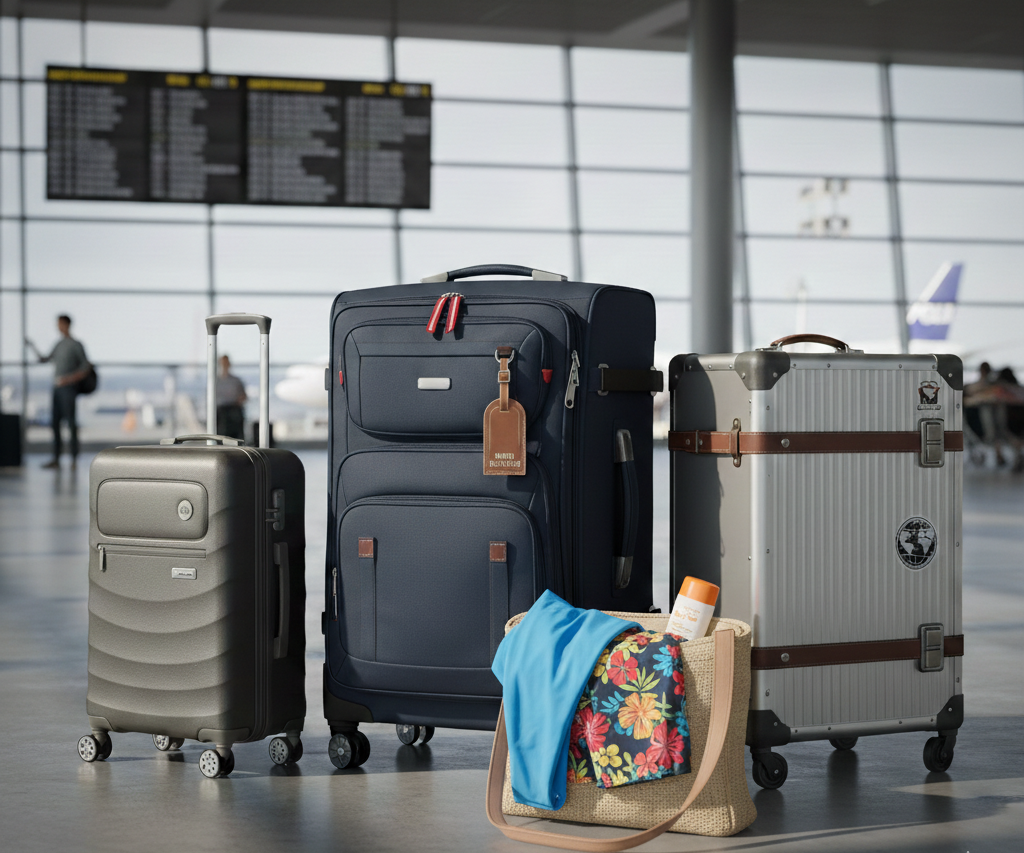
Cruise cabin storage is more generous than many people expect, but it’s still limited. Two large checked suitcases for a week-long cruise is almost always too much. One checked bag per person plus a carry-on is the sweet spot for most travelers.
Types of Luggage
Checked Suitcases
Standard checked bags (27-29 inches) work well for cruises. Unlike flying where you pay per checked bag, most cruise embarkation doesn’t charge for luggage — your bags go straight to the ship. Hard-shell options protect fragile items like formal shoes and dress clothes better, while soft-sided bags offer slight expansion flexibility for souvenirs on the return trip. Invest in durable options with good warranties — quality luggage withstands rough handling by baggage handlers.
Carry-On Suitcases
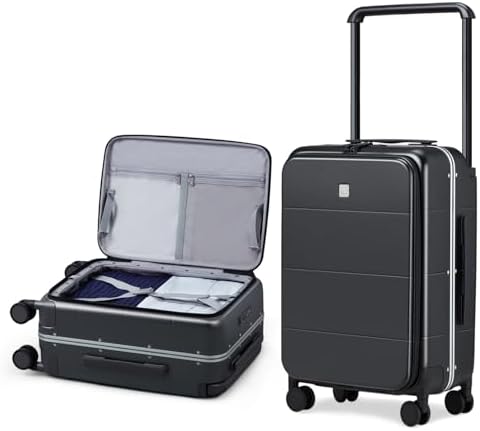
Carry-on sized bags (typically 22″ x 14″ x 9″) are ideal for the items you need immediately on boarding day. For efficient packers on shorter cruises (3-5 nights), carry-on only is entirely possible. Spinner wheels make navigating gangways and terminals much easier. Hard-shell options protect fragile items better, while soft-sided bags offer slight expansion flexibility.
Travel Backpacks and Day Bags
A smaller day bag is essential for shore excursions. This becomes your port bag — lightweight enough to carry all day, secure enough for valuables. Look for comfortable straps, multiple compartments, water-resistant materials, and security features like lockable zippers. Don’t pack this inside your checked luggage; bring it as your personal item on the flight.
Key Luggage Features to Consider
- Wheel Configuration: Four spinner wheels allow 360-degree rotation — essential for navigating cruise terminals and ship corridors
- Handle Quality: Telescoping handles should extend smoothly, lock at multiple heights, and feel sturdy
- Weight: Empty luggage weight matters. Cruise ships don’t charge for checked bags, but airlines getting you there do
- Interior Organization: Compression straps keep contents secure; dividers separate formal wear from casual clothes
- Durability and Warranty: Quality luggage is an investment that pays off over years of travel

Developing Your Packing Strategy: Think Before You Pack
Successful cruise packing begins long before you open your suitcase. Strategic thinking prevents both overpacking and forgetting essentials.
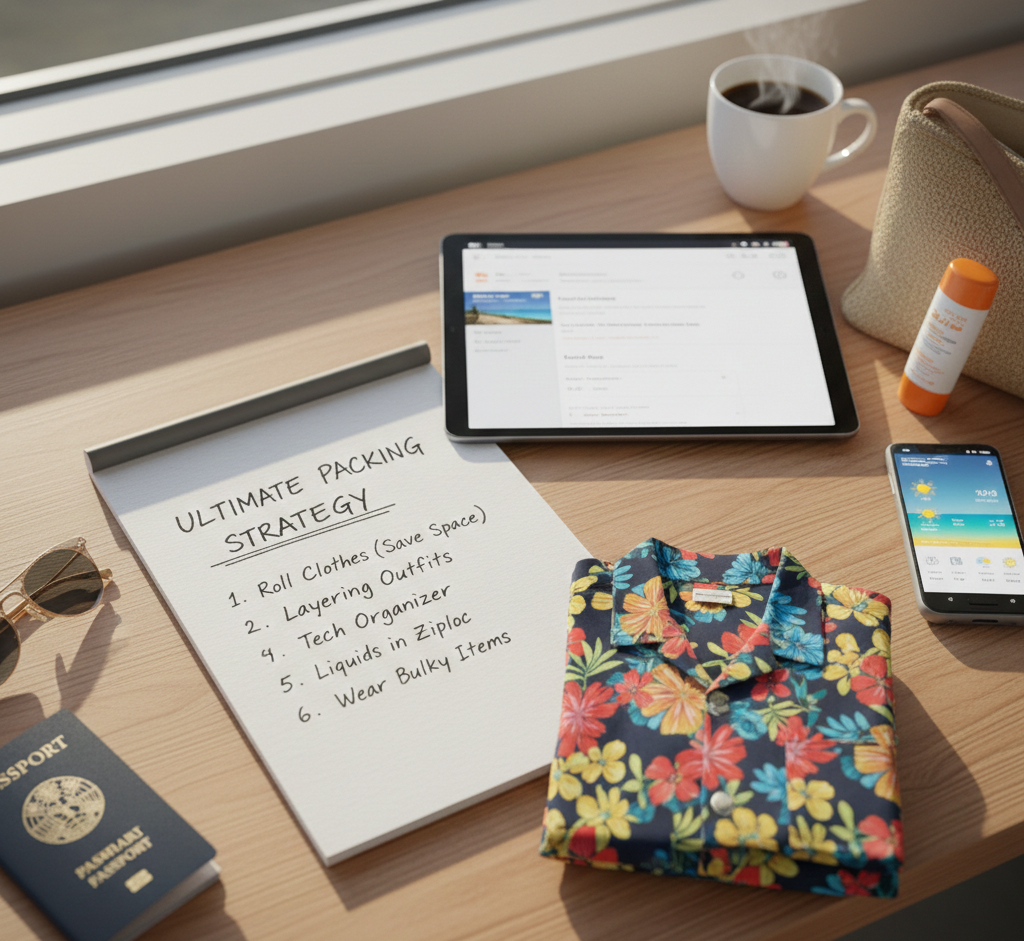
Map Out Your Cruise Itinerary First
How Many Formal Nights?
Most 7-night cruises have 1-2 formal nights. 3-5 night cruises typically have one. 10-14 night cruises may have 3. This directly determines how many formal outfits to pack. Don’t bring four formal options for two formal nights — you’ll wear one and the others will take up space the entire trip.
How Many Sea Days vs. Port Days?
Sea days are pool and deck days — swimwear, cover-ups, and casual clothes. Port days require comfortable walking shoes, a day bag, and practical clothes for whatever you’re doing ashore. If your itinerary has four port days, you’ll want at least four comfortable walking outfits that double as evening casual wear.
Climate Research
Research your destination’s actual weather during your travel dates, not just general climate descriptions. Caribbean cruises in November feel very different from Caribbean cruises in July. Alaska cruises require layering even in summer. Check historical weather data for temperature ranges, precipitation probability, and humidity. This prevents packing a winter jacket you’ll never use or forgetting a rain layer you desperately need.
The Capsule Wardrobe Approach for Cruises
Capsule wardrobes apply fashion principles to cruise packing: select items that coordinate together, creating multiple outfits from fewer pieces. This approach maximizes versatility while minimizing bulk.
Choose a color palette for your cruise — typically 2-3 neutral base colors (black, navy, gray, khaki, white) with 1-2 accent colors. Every item should coordinate with at least two others, allowing mix-and-match flexibility. A black dress works for formal night with heels, for dinner at a specialty restaurant with sandals, and for a port day with sneakers and a denim jacket.
The 5-4-3-2-1 Cruise Packing Method
Five versatile tops form your core wardrobe. Choose shirts and blouses that mix and match with all your bottoms. Include at least one dressy option for nicer dinners or events.
Four bottoms provide variety without excess. Two pairs of pants or jeans, one pair of shorts, and one skirt or additional pants create multiple outfit combinations. Stick to neutral colors that coordinate with all your tops.
Three pairs of shoes maximum: walking shoes worn during travel and port days, dressy shoes for formal and specialty dining nights, and casual sandals or flip-flops for pool days. Shoes consume the most cabin storage space, so choose carefully.
Two formal outfits or dressier looks for formal nights and specialty dining. For women, a simple dress or elegant separates work well. For men, a suit jacket with dress pants covers almost all formal nights on mainstream cruise lines.
One swimsuit per day you expect to use the pool — minimum two total. A wet swimsuit can’t be re-worn immediately, and alternating lets each one dry fully.
The Laying Out Method
Before packing anything, lay out everything you think you’ll need on the bed. This visual inventory lets you see if items coordinate, identify redundancies or gaps, and reconsider “just in case” items. After laying everything out, remove 20-30% of items. First-time packers almost always overpack. If you can’t wear it at least twice during the cruise, it doesn’t earn its place in your suitcase.
The “Wear It Twice” Rule
Except for swimwear, underwear, and socks, plan to wear everything at least twice. This alone cuts packing volume significantly. Dinner pants worn on Monday night work again on Thursday. A cover-up worn to breakfast works again at the pool. If you can’t imagine wearing something twice on the cruise, leave it home.
Space-Saving Packing Techniques: Maximizing Every Inch
How you pack matters as much as what you pack. These cruise packing techniques maximize space while protecting your belongings — especially important when your cabin storage is limited.
Packing Cubes: Game Changers for Cruise Cabins
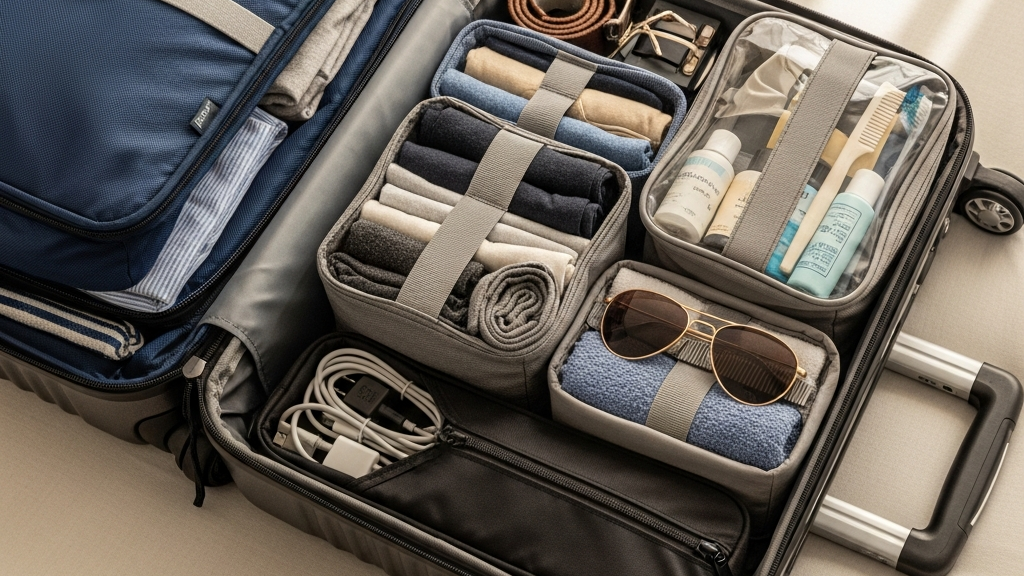
Packing cubes are fabric containers that organize and compress clothes within your luggage. In a cruise cabin where you’re living out of your suitcase for days or weeks, they’re not just organizers — they’re sanity preservers. Your cabin steward will tidy your room daily, but a pile of loose clothes on the floor or bed creates chaos in a small space.
Benefits of Packing Cubes
- Unpacking ease: Move cubes from luggage to cabin shelves without full unpacking
- Compression: Quality cubes compress clothes, creating more space in your suitcase and cabin storage
- Organization: Different cubes for different categories (swimwear, casual, formal, workout)
- Easy access: Find items without unpacking the entire suitcase — critical in a small cabin
- Clean/dirty separation: Use separate cubes for worn clothes so laundry doesn’t mix with fresh items
Rolling vs. Folding vs. Bundling
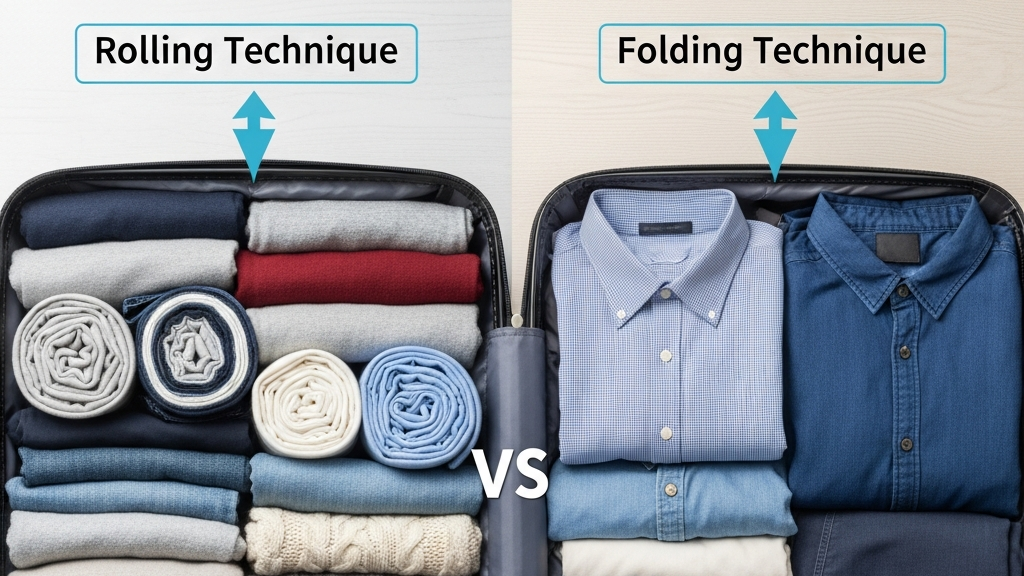
Rolling Method
Rolling clothes tightly creates compact cylinders that fit efficiently in luggage while minimizing wrinkles. Best for: t-shirts, casual pants, undergarments, swimwear, workout clothes. Lay garment flat, smooth wrinkles, fold in sides if needed, then roll tightly from one end. The tighter you roll, the more space you save.
Folding Method
Traditional folding works well for structured items that don’t roll well. Best for: dress shirts, blazers, formal pants. Fold along natural lines following seams, use tissue paper between folds for delicate fabrics, and place folded items on top of rolled items in luggage.
The Bundle Method for Formal Wear
Bundle wrapping clothes around a core item minimizes wrinkles dramatically — especially valuable for cruise formal night outfits. Place a core object like a toiletry bag in the center, layer clothes around it alternating collars and hems, then wrap each layer around the core. The result looks like a fabric bundle but arrives nearly wrinkle-free. Best for business travel and cruise formal wear where you need clothes to look crisp on arrival.
Hybrid Approach
Most efficient cruise packers use combinations: rolling casual items, folding nicer pieces, bundling formal wear, and using packing cubes for compression. Experiment to find what works for your clothing types and packing style.
Strategic Packing Order
The order you pack items matters for space efficiency and wrinkle prevention:
- Heavy items on bottom (nearest wheels): Shoes, toiletries, books — keeps your bag balanced
- Large, wrinkle-resistant rolled items: Jeans, workout clothes, pajamas create a foundation
- Packing cubes with most clothes: The bulk of your wardrobe, compressed and organized
- Bundled or folded formal items on top: Dress clothes, items you want least wrinkled
- Soft items filling gaps: Underwear, socks, belts stuffed around edges and into corners
- Last-minute items on very top: Items you might need during transit or first day onboard
Utilizing Every Space
Expert cruise packers waste no space:
- Inside shoes: Stuff socks, underwear, chargers, or small items inside shoes
- Hood and pockets: Fill jacket hoods and pockets with small items
- Corner spaces: Roll small items (belts, chargers) to fill awkward corners
- Between and around: Fill gaps between larger items with soft, flexible pieces
Toiletries and Personal Care: What to Bring and What to Buy Onboard
Toiletries can quickly consume suitcase space and weight while causing security screening hassles. On a cruise, you have the added advantage of knowing exactly what’s already waiting in your cabin — and what the ship’s store stocks if you forget something.
The 3-1-1 Rule for Carry-On
TSA (and most international security) requires liquids in carry-on to follow the 3-1-1 rule: 3 ounces (100ml) or less per container, 1 quart-sized clear plastic bag, 1 bag per passenger. Since your checked bags go straight to the ship and may not arrive for hours, keep essential toiletries in your carry-on using travel-sized containers or solid alternatives.
Solid Alternatives (Bypass Liquid Restrictions Entirely)
- Solid deodorant: Standard stick deodorant counts as solid, not liquid
- Shampoo and conditioner bars: Last longer than bottled versions, no liquid restrictions, and take up almost no space
- Solid soap: Classic and effective — use soap containers to prevent mess
- Toothpaste tablets: Chewable tablets that foam like regular toothpaste
Essential Toiletries List for a Cruise
- Toothbrush and toothpaste
- Deodorant
- Shampoo and conditioner (travel size — ship provides these but you may prefer your own)
- Face wash and moisturizer
- Reef-safe sunscreen (SPF 50+) — bring from home, ship store prices are significantly higher
- After-sun lotion or aloe vera
- Razor and shaving cream/gel
- Prescription medications in original labeled containers
- Pain relievers, seasickness remedies, digestive aids
- First aid supplies (bandages, antibiotic ointment, blister treatment)
- Motion sickness medication — start taking it the day before if you’re prone
Electronics and Technology
Modern cruise travel involves numerous electronic devices, each with charging needs and accessories. Cruise cabin outlets are limited — typically 1-2 North American outlets and sometimes a European outlet. Plan accordingly.
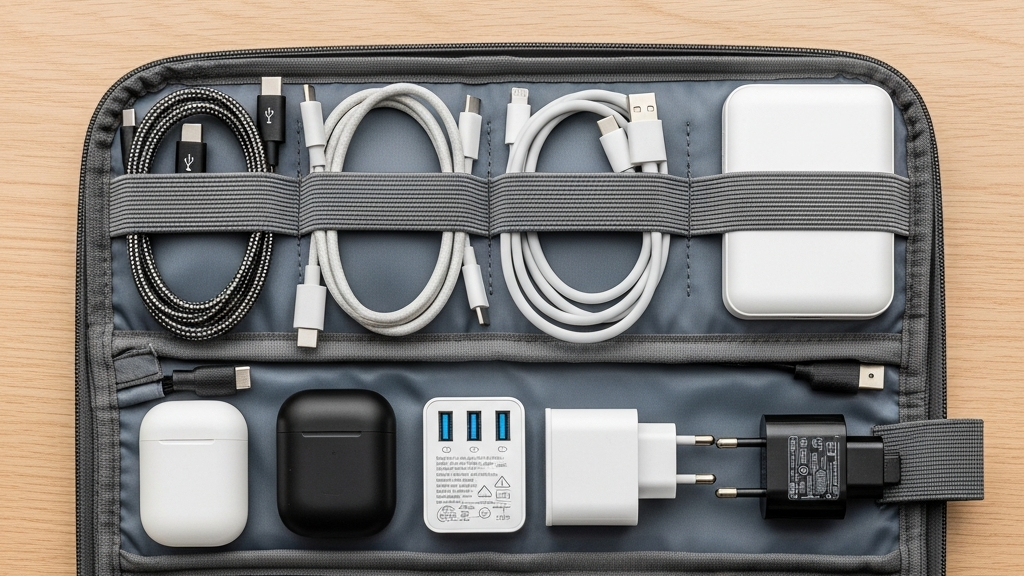
Essential Electronics for a Cruise
- Smartphone: Camera, map, boarding pass storage, communication tool — your most essential device
- Chargers and Cables: Pack chargers for every device, plus one backup cable for your phone
- Power Banks: Essential for port days when you’re away from the cabin all day (10,000mAh charges most phones 2-3 times)
- Power Strip (no surge protector): Cruise lines prohibit surge protectors but allow basic power strips — this solves the limited outlets problem
- Universal Adapters: If visiting European or other international ports, a plug adapter lets you charge devices ashore
- Headphones: For flights and sea days; noise-canceling headphones transform long flight experiences
Organization
Tech Organizer Pouches
Dedicated tech organizers with elastic loops, pockets, and compartments keep cables untangled and accessories organized. In a small cruise cabin where counter space is limited, a tech organizer pouch keeps everything in one place rather than scattered across the room.
Cable Management
Use cable ties, velcro strips, or cord organizers to prevent tangled cables. Wind cables properly and secure them before packing — and again before leaving ports so nothing gets left behind.


Travel Documents and Money: Essentials for Smooth Cruise Travel
Proper document organization prevents delays, stress, and potentially serious travel problems. Cruise travel has specific documentation requirements that differ from regular travel.
Essential Documents for a Cruise
- Passport: Required for international cruises. Even for “closed-loop” domestic cruises (departing and returning to the same U.S. port), a passport is strongly recommended — without one, a medical emergency requiring you to fly home from a foreign port becomes extremely complicated
- Cruise boarding pass and booking confirmation: Print these and save digital copies
- Travel Insurance Documents: Print confirmation and policy details including emergency contact numbers
- Driver’s License: Bring even if not planning to drive — serves as additional ID at ports
- Medical Information: Vaccination records if required, prescription copies, medical conditions summary
Money and Payment Methods on a Cruise
- Credit and Debit Cards: Bring at least two different cards. Link your preferred card to your cruise account at embarkation — everything onboard charges to your cabin account
- Cash for Ports: Carry local currency for tips, small vendors, and markets ashore. $50-100 per port day in small bills is usually sufficient
- Money Organization: Split money between multiple locations — wallet, separate pocket, cabin safe

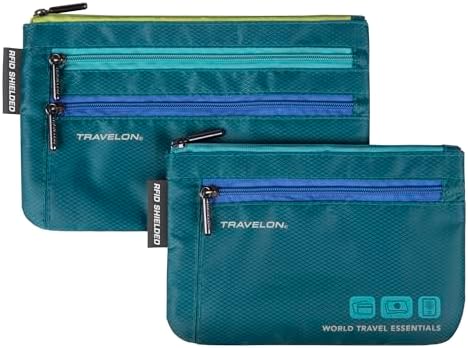

Digital Backups
Scan or photograph all important documents: passport photo page, cruise booking confirmation, driver’s license, credit card numbers and bank contact information, travel insurance policies, prescription information. Store copies in password-protected cloud storage and email to yourself. Leave copies with a trusted person at home.
Packing for Cruise-Specific Situations
While core packing principles apply to all travel, cruise vacations have specific situations that require special consideration.
Formal Nights: What You Actually Need
Formal night outfits vary by cruise line. Luxury lines like Regent and Crystal expect suits and gowns. Premium lines like Celebrity and Princess ask for “resort formal” — cocktail dresses for women, suits or sport coats for men. Mass-market lines like Carnival and Royal Caribbean simply request “cruise elegant” — dressy without being strictly formal.
Resort casual for specialty and main dining room dinners most nights means a step up from daywear without going full formal. Nice pants or dresses with dressier shoes work for most nights. Avoid shorts, tank tops, and flip-flops in main dining rooms — even on casual nights, most lines enforce a minimum standard.
Port Days: Practical Packing for Shore Excursions
Daywear for ports should keep you comfortable during shore excursions while being versatile enough to work in different settings — from historical sites to beach towns to local markets. Walking shorts, casual tops, and comfortable shoes prepare you for most port exploration.
What to bring ashore in your day bag: cruise card (your primary ID returning to the ship), cash and one credit card, water bottle, reef-safe sunscreen, hat, camera, and a small first aid kit. Leave your passport in the cabin safe unless specifically required for your destination.
Packing for Two: Cruise Edition
Couples packing for a cruise have a strategic advantage. Coordinate clothing colors so both partners’ items can mix and match — this effectively doubles outfit combinations without adding suitcase weight.
Share toiletries and accessories to reduce redundancy. One sunscreen, one first aid kit, and one set of common medications serves both people. Split items between bags so that if one bag is lost or delayed, neither person is completely without clothes. Each person packs half their clothes in their bag and half in their partner’s bag.
One person packing lighter creates souvenir space. Decide in advance who has room for purchases at port markets and shops — and how much space to reserve for the return trip.
Cruise-Specific Items You Might Forget
- Magnetic hooks: Cruise cabin walls are magnetic — hooks let you hang bags, lanyards, and hats without taking up shelf space
- Power strip (non-surge): Solves the limited outlet problem; surge protectors are prohibited
- Highlighter or pen: For marking activities in the daily newsletter
- Lanyard for cruise card: You’ll use your card constantly — keeping it on a lanyard prevents losing it
- Clothespins or clips: For drying swimsuits on your balcony rail
- Small flashlight: Useful when returning to cabin late without waking your travel companion
- Over-the-door organizer: Hangs in the bathroom to create extra storage space in small cabins
Destination-Specific Cruise Packing
While core packing principles remain consistent, specific cruise itineraries require special considerations.
Caribbean Cruises
Additional Items Needed
- Swimwear (2+ suits for beach-focused itineraries)
- Beach cover-ups and waterproof day bag
- Reef-safe SPF 50+ sunscreen (required on some cruise lines at private islands)
- After-sun care (aloe vera)
- Wide-brimmed sun hat and UV-protection sunglasses
- Sandals and water shoes for rocky beach entries
- Waterproof phone case for beach and water activities
Packing Strategy
Pack lightweight, quick-dry fabrics. Bring breathable clothes and embrace the casual beach lifestyle. Pack a wet bag for damp swimsuits when returning to the ship from port beaches.

Alaska Cruises
Additional Items Needed
- Insulated rain jacket (the most essential Alaska packing item — wear it while traveling to save space)
- Thermal or moisture-wicking base layers
- Warm mid-layers (fleece, sweaters)
- Waterproof boots or sturdy walking shoes
- Warm hat, gloves, and scarf
- Binoculars for wildlife viewing from the deck
Packing Strategy
Layers, layers, layers. Alaska weather changes rapidly and temperatures vary between the ship deck, ashore, and excursions. Wear bulkiest items during travel. Dark colors hide dirt from muddy trails and ports.
Mediterranean Cruises
Additional Items Needed
- Comfortable broken-in walking shoes — Mediterranean ports involve significant cobblestone walking
- Modest clothing for religious site visits (covered shoulders and knees for churches and mosques)
- Light scarf that doubles as modesty cover and fashion accessory
- Rain jacket for spring and fall Mediterranean cruises
- European plug adapter for charging devices at ports
Packing Strategy
Prioritize versatile clothing that works from port exploration to evening dining. Stick to neutral colors allowing mix-and-match. Plan to walk extensively — comfortable shoes are non-negotiable. One scarf does triple duty: modesty cover at religious sites, beach cover-up, and evening accessory.
Common Cruise Packing Mistakes to Avoid
Even experienced travelers make cruise-specific packing mistakes. Learning from common errors prevents frustration and improves your experience.
Packing a Surge Protector
Cruise lines prohibit surge protectors for fire safety reasons. They will be confiscated. Bring a basic power strip instead — these are allowed and solve your outlet shortage problem efficiently.
Forgetting Reef-Safe Sunscreen
Many cruise lines — and several Caribbean destinations — now require reef-safe sunscreen at private islands and protected marine areas. Sunscreen at the ship store is available but costs significantly more than shore prices. Bring your own reef-safe SPF 50+ and save the markup.
Overpacking Formal Wear
Most travelers pack far more formal options than they’ll use. Check your cruise itinerary for the exact number of formal nights and pack accordingly — one outfit per formal night, no extras. Everything else in the wardrobe serves multiple purposes.
Packing Valuables in Checked Luggage
Lost or delayed luggage happens. Valuables, medications, or important items packed in checked bags that don’t arrive until evening create serious problems. Always pack irreplaceable items, medications, jewelry, electronics, and one change of clothes in your carry-on.
Ignoring the Prohibited Items List
Cruise lines prohibit: clothing irons and steamers, candles and incense, hot plates, weapons of any kind, illegal substances, and fireworks. Check your cruise line’s prohibited items list before packing. Items will be confiscated at embarkation security.
Not Checking Airline Baggage Policies
Different airlines have different size and weight restrictions for carry-on and checked bags. Unexpected fees or having to check bags ruins careful carry-on-only plans. Check your specific airline’s current baggage policy before packing. Measure and weigh your luggage before leaving for the airport.
Master Cruise Packing Checklist: Never Forget Essentials
Comprehensive checklists ensure you pack everything needed without forgetting essentials. Customize these based on your specific cruise itinerary and destination.
Clothing
- ☐ Underwear and socks (one per day plus 2 extras)
- ☐ Casual tops (3-5 depending on cruise length)
- ☐ Pants/shorts/skirts (2-3 bottoms)
- ☐ Sweater or light jacket (for air-conditioned ship interiors and evening deck temperatures)
- ☐ Destination-appropriate outer layer (rain jacket for Alaska/Mediterranean, nothing for Caribbean)
- ☐ Pajamas/sleepwear
- ☐ Formal night outfit(s) — one per formal night on itinerary
- ☐ Swimwear (minimum 2)
- ☐ Cover-ups and beach clothing
Footwear
- ☐ Primary walking/port shoes (broken in before the cruise)
- ☐ Dressy shoes for formal nights
- ☐ Flip-flops or sandals for pool deck
- ☐ Water shoes if snorkeling or visiting rocky beaches (optional)
Toiletries
- ☐ Toothbrush and toothpaste
- ☐ Deodorant
- ☐ Shampoo and conditioner (travel size — optional since ship provides)
- ☐ Reef-safe sunscreen SPF 50+ (bring from home)
- ☐ After-sun care
- ☐ Medications (prescription and OTC including seasickness remedies)
- ☐ First aid kit
- ☐ Motion sickness medication
Electronics
- ☐ Smartphone and charger
- ☐ Power bank
- ☐ Power strip (non-surge protector)
- ☐ Headphones
- ☐ Travel adapter/converter (for European ports)
- ☐ Camera and memory cards
- ☐ Charging cables for all devices
Documents
- ☐ Passport
- ☐ Driver’s license
- ☐ Cruise booking confirmation and boarding pass
- ☐ Travel insurance documents
- ☐ Flight confirmations
- ☐ Credit cards and cash (including port cash in small bills)
Cruise-Specific Extras
- ☐ Magnetic hooks (2-4)
- ☐ Lanyard for cruise card
- ☐ Highlighter for daily newsletter
- ☐ Clothespins for balcony drying
- ☐ Small flashlight
- ☐ Day bag for port excursions
- ☐ Reusable water bottle
- ☐ Ziplock bags in various sizes
- ☐ Over-the-door organizer (optional but useful in small cabins)
Conclusion: Pack Smart, Cruise Happy
Mastering your cruise packing is truly a skill developed over time through experience and learning from other travelers’ mistakes. The strategies, techniques, and checklists in this guide give you everything you need to pack efficiently for any cruise — but your perfect system will evolve as you sail more and discover what you actually use versus what stays in the suitcase untouched.
The single most important principle: efficient cruise packing creates freedom. Freedom from lugging oversized bags through airports and terminals, from cramming clothes into a small cabin, from anxiety about lost luggage. When you pack smart, you arrive ready to enjoy your vacation from the moment the gangway lowers.
Key Takeaways:
- Know your itinerary before you pack — formal nights, port days, and destinations determine everything
- The ship provides more than you think — don’t pack hair dryers, beach towels, or full-size toiletries
- Pack your carry-on as if your checked bag won’t arrive until tomorrow
- Packing cubes are essential for cruise cabin organization — invest in a set before your first cruise
- Three pairs of shoes maximum — this is the single easiest way to reduce suitcase weight
- Reef-safe sunscreen from home saves money and is often required at ports and private islands
- Magnetic hooks and a basic power strip transform a small cabin into a functional living space
After each cruise, take a few minutes to reflect on your packing. What did you never wear? What did you wish you’d brought? What took up space and never left the cabin? These reflections inform future cruises, gradually refining your personal system until packing feels effortless.
Frequently Asked Questions About Cruise Packing
Do I need a passport for a cruise?
Technically, U.S. citizens on closed-loop cruises (departing and returning to the same U.S. port) can use a birth certificate and government ID instead of a passport. However, a passport is strongly recommended. If you have a medical emergency at a foreign port and need to fly home, you’ll need a passport. It also makes re-entry smoother at every port. If you travel internationally at all, getting a passport is always the right call.
What should I pack in my carry-on for embarkation day?
Pack everything you’ll need for the first 6-8 hours onboard: swimsuit and cover-up (hit the pool immediately after lunch), sunscreen, medications, all travel documents, phone charger and power bank, one change of clothes, and any valuables. Your checked luggage may not arrive at your cabin until late afternoon or early evening.
Should I use packing cubes for a cruise?
Yes — packing cubes are especially valuable for cruise travel. Your cabin has limited storage, and living out of a disorganized suitcase for 7-14 days creates daily frustration. Cubes let you move organized clothing blocks from suitcase to cabin shelf and back without repacking everything. The investment pays off immediately.
How many shoes should I pack for a cruise?
Three pairs maximum: walking shoes for port days (worn during travel to save space), dressy shoes for formal nights and specialty dining, and flip-flops or sandals for pool deck use. Shoes are heavy and bulky — choosing three versatile pairs is the single most effective way to reduce suitcase weight.
What should always go in carry-on vs. checked luggage?
Always in carry-on: passport and all travel documents, medications, valuables and electronics, one complete outfit change including swimsuit, and essential toiletries. Checked luggage can contain: bulk of clothing, full-sized toiletries, shoes (except those being worn), formal wear, and non-essential items.
How far in advance should I start packing for a cruise?
Start a packing list 1-2 weeks before departure, adding items as you think of them. Review your cruise itinerary to confirm the number of formal nights and port activities. Begin actual packing 2-3 days before departure. This timeline prevents rushing and allows time to acquire forgotten items — or discover the surge protector you were planning to bring is prohibited.
Related Resources:
- Cruise Mistakes First-Timers Make: Avoid the most common cruise errors
- Shore Excursions Guide: How to plan your port days like a pro
External Resources:
- TSA Travel Checklist: https://www.tsa.gov/travel/travel-tips/travel-checklist
- Travel + Leisure: htthttps://www.travelandleisure.com/travel-tips/packing-tips
- How To Pack Light for Travel: https://www.rei.com/learn/expert-advice/traveling-light.html
