
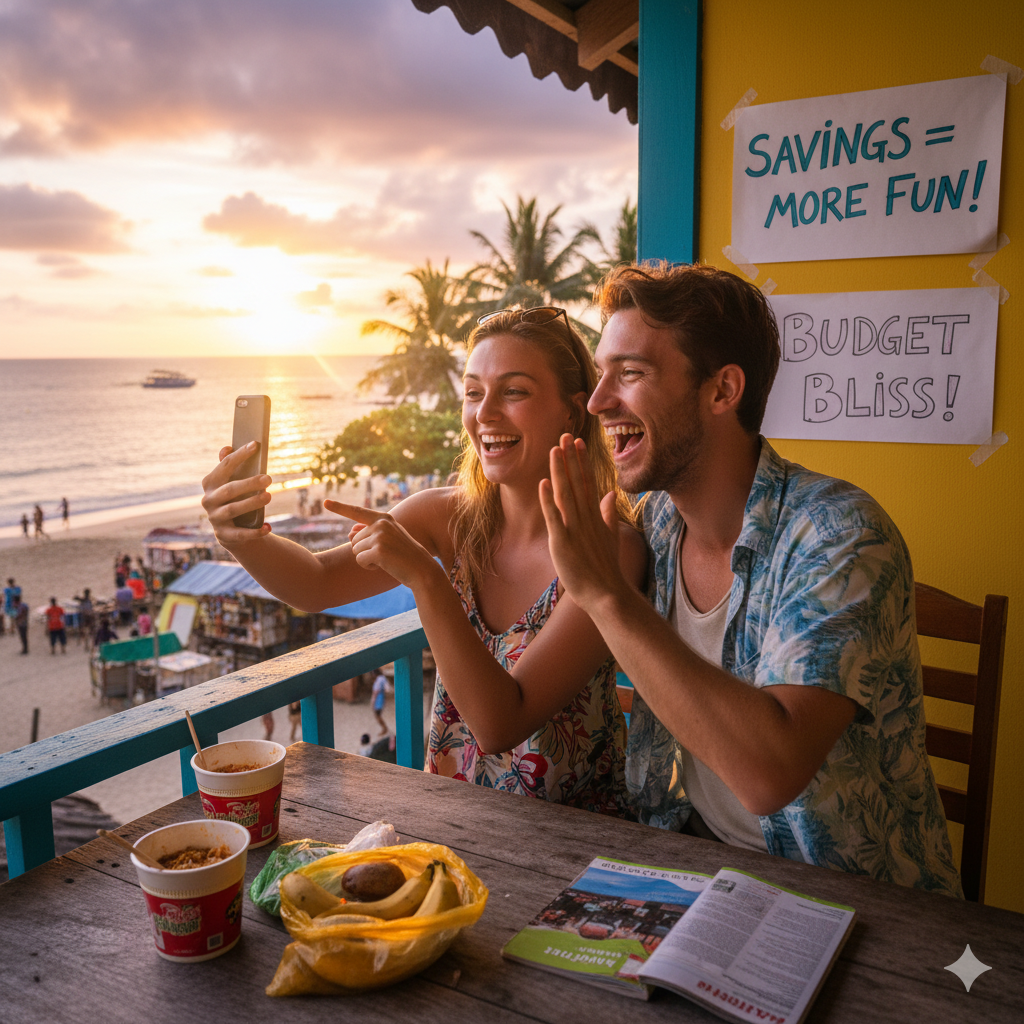
Traveling as a couple has a hidden financial advantage that most guides ignore. Two people sharing costs — one hotel room, one rental car, one Airbnb — means you’re already splitting the biggest line items. The real budget wins for couples come from coordinating your spending strategically, not from giving up the experiences that make travel worth doing together.
This guide isn’t about deprivation. It’s about the specific savings that open up when two people travel smart together — and the money conversations couples should have before booking anything. Whether you’re planning a romantic beach week, a city adventure, or a resort vacation, these proven budget travel for couples strategies help you travel more while spending less.
Quick Takeaways:
- Budget one splurge per day — one great meal, one memorable activity — and go budget on everything else
- Couples have a structural cost advantage — one room, split evenly, is always cheaper than two single travelers paying solo supplements
- Have the budget conversation before booking: who pays for what, what’s the total spend limit, what are each person’s non-negotiables?
- Fly Tuesday/Wednesday instead of Friday/Sunday — saves $100-300 per ticket, or $200-600 per couple
- Shoulder season travel (April-May, September-November) cuts resort and hotel prices 40-60% with minimal trade-off in weather
- Share toiletries, one charger kit, one first aid kit — the couple that packs light together travels better together
Table of Contents

Flight Savings Strategies
Flights often represent your biggest single expense as a couple. Small savings per ticket double immediately when you’re buying two.
Booking Timing That Actually Matters
The 6-8 Week Sweet Spot for Domestic: Data shows domestic flights typically hit lowest prices 6-8 weeks before departure. Airlines release sales, adjust pricing algorithms, and competition drives prices down in this window. For couples with flexible schedules, this is the most reliable savings window.
International Flights: 3-6 Months Ahead: International fares generally bottom out 3-6 months before travel. Book too early (10+ months) and you miss sales. Book too late (under 3 weeks) and you pay premiums. On a couples international trip, booking at the right time vs. the wrong time can mean $400-800 total savings for two tickets.
The Tuesday Myth: Forget “book on Tuesday” advice — it’s outdated. Airlines adjust prices constantly throughout the week. What matters is when you travel, not when you book.
Google Flights Price Tracking: Enable price alerts for your routes. Google notifies both of you when fares drop, so you can book together at optimal moments without one partner having to monitor constantly.
Flight Search Strategies
Be Flexible with Dates: As a couple, one of you might have more scheduling flexibility than the other. Flying Tuesday/Wednesday vs. Friday/Sunday saves $100-300 per ticket — that’s $200-600 total for two. Use Google Flights calendar view to compare prices across entire months. Shifting travel dates by 2-3 days often reveals significant savings.
Nearby Airport Options: Check alternative airports within 100 miles. Flying into Newark vs. JFK, Oakland vs. SFO, or Burbank vs. LAX sometimes saves hundreds per ticket. Calculate total cost including ground transportation to determine true savings.
One-Way vs. Round-Trip: Airlines don’t always offer best prices for round-trip bookings. Check one-way fares separately — sometimes booking two one-ways on different airlines costs less.
Budget Airlines: Spirit, Frontier, Southwest (domestic), Ryanair, EasyJet (Europe) offer rock-bottom base fares. For couples, understand their fee structures — bag fees for two people add up fast. Calculate total cost with fees before booking. Sometimes a slightly higher-priced mainstream carrier beats the budget airline total when you add two checked bags.

Miles and Points Strategy for Couples
Credit Card Sign-Up Bonuses: Travel credit cards offer 50,000-100,000 bonus points worth $500-1,500 in travel. As a couple, each of you can earn a sign-up bonus — that’s potentially $1,000-3,000 in combined travel value from two cards. Chase Sapphire, Capital One Venture, American Express Gold provide best value.
Airline Loyalty Programs: Join free frequent flyer programs and track miles for both partners. Use miles for expensive long-haul flights — domestic economy doesn’t provide great value, but long-haul business class for two offers exceptional redemptions that would cost thousands to buy.
Transfer Partners Maximize Value: Credit card points transfer to airline partners at better ratios than booking through card travel portals. Research transfer partners before redeeming — this knowledge is worth hundreds of dollars in practice.
Money-Saving Flight Tactics
Red-Eye Flights Cost Less: Overnight flights (departing 9pm-1am) typically price 20-40% below daytime equivalents. Bonus: saves a hotel night at your origin city. Sleep on the plane, arrive ready to explore together.
Midweek Travel Wins: Tuesday, Wednesday, Saturday departures cost significantly less than Thursday, Friday, Sunday. If one partner has more schedule flexibility, build the trip around the cheaper travel days.
Avoid Peak Holiday Travel: Flying December 20-26 costs 3-4x normal prices for two tickets. Shift Christmas travel to December 27+ or before December 20 for massive savings. Same applies to Thanksgiving, spring break, summer peak.
Layovers Save Money: Direct flights command premiums. Accept one connection and save $100-300 per ticket. Avoid 30-minute connections (stressful) but 2-3 hour layovers work fine and cut costs for both of you.
Accommodation on a Budget
The Couples Accommodation Advantage
Here’s the structural win couples have over solo travelers: a hotel room that costs $150/night costs $75 per person for two. A solo traveler at a hostel pays $40 for a bed in a shared dorm. At comparable comfort levels, couples often come out ahead — especially at Airbnbs and vacation rentals where splitting a full apartment is dramatically cheaper than two people booking separate accommodations.
- Airbnb for Longer Stays: Hotels win for 1-2 nights. Airbnbs win for week-long stays — weekly discounts plus kitchen access (groceries much cheaper than restaurants) provide excellent couple value. An entire apartment at $120/night is $60 per person, with a kitchen for breakfast and lunch, often in a residential neighborhood rather than an overpriced tourist district.
- Vacation Rentals by Owner (VRBO): Similar to Airbnb but often better for entire properties. Good for couples wanting space and privacy — especially useful when you want a romantic home base rather than a hotel room.
- Home Exchanges: Trade homes with travelers in your destination. Platforms like HomeExchange, Love Home Swap connect home swappers. Pay annual membership ($150-200) and stay free in exchanged homes. For couples, this is the ultimate accommodation hack — a free home in your destination in exchange for hosting travelers in yours.
- House-Sitting: TrustedHousesitters, MindMyHouse connect travelers with homeowners needing house/pet sitters. Free accommodation in exchange for caring for home and pets. Couples tend to be preferred house-sitters over solo travelers — two people feel more reassuring to homeowners.

Hotel Booking Strategies
Last-Minute Apps Pay Off: HotelTonight, LastMinute.com offer unsold inventory at 30-70% discounts. Works best for flexible couples who can decide where to stay 24-48 hours out.
Comparison Shop, Then Call Direct: Use Trivago, Kayak, Google Hotels to compare rates. Note best price, then call the hotel directly and ask to match or beat it. Hotels save online booking fees when direct bookings happen — they can often discount further and may add a small perk for a couple (room upgrade, late checkout).
Credit Card Hotel Benefits: Many travel credit cards provide automatic elite status, room upgrades, daily breakfast, resort credit. For couples, breakfast included is worth $30-60/day in savings — often enough to cover the card’s annual fee on a single trip.
Location Strategy Saves Money
Stay Outside Tourist Center: Hotels in city centers cost 2-3x properties 15-20 minutes away. Stay in residential neighborhoods near metro lines — save money, experience local life, still access attractions easily. As a couple, exploring a neighborhood together on foot can become the highlight of a trip rather than just the commute to attractions.
Near Public Transit: Location near subway/bus stations allows cheap transportation to attractions. Saves on taxis while providing a local transportation experience you can navigate together.
Residential Neighborhoods: Authentic restaurants, local markets, lower prices. Tourist districts inflate everything. The restaurants locals eat at are almost always better and cheaper than anything near the main attractions.
Daily Spending Savings
Food and Dining as a Couple
Grocery Stores Are Your Friend: Buy breakfast and lunch supplies at local grocery stores. Yogurt, fruit, sandwiches, snacks cost $10-15 for both of you vs. $30-50 at restaurants. Splurge on special dinners together while saving on routine meals. Sharing grocery shopping is also genuinely enjoyable — markets are often highlights of international travel.
Street Food and Local Markets: Best food experiences often come from street vendors and markets — authentic, cheap, delicious. $3-8 meals vs. $20-40 restaurant charges for two. Food safety fine in most destinations if vendors are busy (high turnover means fresh food). Eating street food together is one of those travel memories that sticks.
Happy Hour Strategy: Many restaurants offer half-price appetizers and drinks during happy hour (4-7pm typically). Make happy hour your dinner — order 2-3 appetizers and drinks each for a full meal at a fraction of dinner prices. For couples who like to share dishes anyway, this is a natural fit.
Lunch Instead of Dinner: Same restaurants charge 30-50% less at lunch. Sample upscale restaurants during lunch service — same food, smaller portions, lower prices. Save the romantic dinner splurge for one truly special night rather than every night.
Share Dishes: In many countries, portions are sized for sharing. Order 2-3 dishes for two people rather than one each — you try more food, waste less, and often spend significantly less than two full individual orders.

Transportation Savings
Public Transit Over Taxis: Metro/subway systems cost $2-5 per ride vs. $15-30 for taxis covering the same distance. For two people, that’s $4-10 vs. $15-30 per trip. Learn the system together — navigating public transit in a foreign city is one of those small adventures that couples remember.
Walking Tours (Free or Tip-Based): Many cities offer free walking tours (tip-based). Guides work for tips, providing excellent tours. Usually $10-20 tip per person vs. $40-80 paid tours. For couples, a free walking tour is often the best first day activity in any new city.
Bike Rentals and Bike Shares: City bike programs ($5-15/day per person) let you explore while exercising. Cycling together through a destination covers more ground than walking, costs less than transportation, and offers a shared perspective on the city.
Skip Rental Cars When Possible: Car rentals seem convenient but add up: daily rate, insurance, gas, parking ($30-50/day in cities). For cities, use public transit and occasional rideshare. Rent cars only for specific days that genuinely need them — road trip days, off-the-beaten-path excursions.
Activities and Attractions
Free Museum Days/Hours: Most museums offer free admission certain days or hours. Paris museums free first Sunday monthly. Smithsonians always free. Research before visiting — time visits for free access. For couples, a shared museum afternoon with no admission cost is just as romantic as a paid experience.
City Parks and Beaches: World-class experiences cost nothing. Central Park in New York, Hyde Park in London, the Marais in Paris — free, beautiful, full-day activities for couples who enjoy exploring on foot.
Free Festivals and Events: Cities host free concerts, festivals, markets, events year-round. Check tourism websites and local event calendars. Free entertainment rivals paid attractions, and stumbling across a local festival together is the kind of travel memory that doesn’t cost a thing.
Where Your Money Goes Further as a Couple
Southeast Asia (Thailand, Vietnam, Cambodia): $30-50 per day per person covers everything — but as a couple sharing accommodation, your real cost is even lower. Beautiful resorts for $30-60/night total, amazing food ($3-8 per meal each), cheap transportation, incredible experiences. The romantic potential here (beachfront bungalows, boat trips, temple visits) rivals destinations that cost ten times more.
Eastern Europe (Poland, Romania, Czech Republic, Hungary): Western Europe quality at a fraction of the prices. Prague, Krakow, Budapest offer stunning architecture, excellent food, and vibrant nightlife for $50-80 daily per person vs. $150-250 in Western Europe. Couples who’ve already done Paris and Rome often find Eastern Europe more genuinely adventurous.
Central America (Guatemala, Nicaragua, El Salvador): Beaches, Mayan ruins, volcanoes, colonial cities for $40-70 daily per person. Short flights from U.S., no jet lag, incredible value — and genuinely romantic destinations that most couples overlook.
Portugal: Europe’s best value for couples. Lisbon and Porto offer European sophistication at half the cost of Spain, France, or Italy. $80-120 daily per person vs. $150-250 elsewhere in Western Europe — with world-class food, wine, and scenery.
Mexico (Beyond the Resort Zones): Close to U.S., no jet lag, incredible value outside touristy Cancun/Cabo. Oaxaca, Guanajuato, San Miguel de Allende offer authentic Mexico for $60-100 daily per person — with food and culture that resort zones can’t match.
Shoulder Season Travel
Sweet Spot Between Peak and Off: Shoulder seasons (April-May, September-November for most destinations) offer 40-60% savings vs. peak season with still-decent weather. For couples, this translates directly — the same resort or hotel room that costs $300/night in peak season often costs $150-180 in shoulder season.
Caribbean Shoulder: May and November have lower prices, fewer crowds, acceptable weather. Some rain but far from hurricane season peak. Resort prices drop significantly and the beaches are less crowded — often a better romantic experience than peak season.
Europe Shoulder: May-early June and September-October provide excellent weather, manageable crowds, and significantly lower prices than July and August. Summer is the worst time for budget travelers to visit Europe — shoulder season is when it’s actually enjoyable.
Planning and Preparation Savings
The Couples Money Conversation to Have Before Booking
The single biggest budget mistake couples make is not having the financial conversation before departure. Misaligned expectations about spending create vacation conflict — which is expensive emotionally, not just financially.
- Set a Total Budget Together: What’s the total you’re comfortable spending? Not per person — total. Agree on this number before looking at anything else. It frames every subsequent decision.
- Identify Each Person’s Non-Negotiables: What does each of you need to enjoy this trip? One person might insist on staying somewhere comfortable. The other might care most about doing a specific experience. Knowing each other’s priorities lets you allocate budget deliberately rather than guessing.
- Decide Who Pays for What: 50/50 split? Proportional to income? Take turns by category (one person handles accommodation, the other handles food)? No scoring? Agree upfront. Money disagreements on vacation are disproportionately damaging — avoid them by deciding the system before you go.
- Pre-Book Attractions Online: Museums, attractions, tours cost 10-30% less booking online vs. showing up day-of. For two people, that 10-30% is doubled. Skip-the-line tickets also save time — and wasted time on vacation has a real cost.
- Create Daily Budgets: Allocate specific amounts per day per couple for accommodation, food, activities, transportation. Track spending together daily. When one category runs over, adjust another — rather than discovering the overspend on the last day.
Travel Insurance Saves Money
Counterintuitive But True: Travel insurance costs 5-7% of trip cost but protects 100% of your investment. Medical emergency, trip cancellation, lost luggage — for couples, this means neither of you loses thousands if the other gets sick before or during the trip.
Medical Coverage Abroad Essential: Your U.S. health insurance likely doesn’t cover international medical treatment. $100 in insurance vs. $50,000 medical evacuation for two — the math is obvious.
Money Management
No Foreign Transaction Fee Credit Cards: Cards charging 3% foreign transaction fees cost $90 on $3,000 spending — double that for two people spending $3,000 each. Use Capital One, Chase Sapphire, or other no-fee cards. That’s $180 in savings for doing nothing differently.
ATMs Beat Currency Exchange: ATMs provide best exchange rates. Airport currency exchanges charge 10-15% markup. For couples, this means using one partner’s bank ATM card with better foreign withdrawal terms, withdrawing larger amounts to minimize per-transaction fees.
Keep Backup Cards Separate: Each partner should carry at least one card the other doesn’t have access to. If one wallet is stolen, you still have access to money — an important redundancy for couples where both people might otherwise be stranded simultaneously.
Budget Travel Mindset for Couples
Splurge vs. Save Decisions Together
Budget One Splurge Per Day: The couples budget that actually works isn’t about eliminating everything — it’s about deliberate splurging. Pick one thing each day that matters to one or both of you and do it well. Great dinner tonight, cheap lunch tomorrow. Splurge on the experience you’ll talk about for years; save on the things you won’t remember.
Experiences Over Comfort: Would you rather stay in a luxury hotel or do that once-in-a-lifetime activity together? Budget couples prioritize experiences over thread count. The story is always more valuable than the room.
One Memorable Meal, Rest Budget: Budget one truly special dinner — the beachfront restaurant, the Michelin-recommended place, the local chef’s tasting menu. Eat cheaply otherwise. One $100 dinner for two creates a permanent memory. Seven $100 dinners just depletes the budget.
Slow Travel Saves Couples Money
Stay Longer in Fewer Places: Moving between cities costs money — transportation, tourist prices at each stop, accommodation inefficiency. Stay a week in one place vs. one night in seven cities — saves hundreds and allows the kind of relaxed exploration that couples actually enjoy more than a frantic multi-city sprint.
Weekly/Monthly Rates: Accommodations offer significant discounts for week-long or longer stays. Airbnb often 30-40% cheaper for weekly vs. nightly rates. For couples planning a romantic week somewhere, booking the full week at weekly rates often saves $200-400 over booking nightly.
Cook Some Meals Together: Kitchen access allows cooking breakfasts and lunches — even simple meals save $100-200 weekly per couple. Grocery shopping in a foreign market and cooking together is genuinely fun, and local ingredients at local prices are often incredible.
Live Like Locals: Tourist areas inflate everything. Shop where locals shop, eat where locals eat, use local transportation. The local experience is usually better anyway — authentic restaurants, real neighborhoods, interactions with people who actually live there.
Realistic Budgeting Together
Track Spending Daily: Review expenses each evening together. Overspent on lunch? Skip the expensive dinner. Underspent yesterday? Splurge today. Daily tracking as a team prevents budget blow-ups and removes money as a source of vacation tension.
Build 20% Buffer: Budget $200 daily for two but add 20% buffer ($240). Unexpected expenses always emerge — especially when two people are making spontaneous decisions. Buffer prevents stress when they do.
Some Things Worth Paying For Together: Safety, health, once-in-a-lifetime experiences — don’t cheap out on everything. Budget travel is smart spending, not deprivation. A couple who saves money on accommodation and flights and then doesn’t do the thing they came to do has missed the point.

Frequently Asked Questions
How much should a couple budget for a week-long international trip?
A realistic budget for two people on an international week-long trip ranges from $3,000-8,000 total depending on destination and travel style. Budget breakdown: flights ($600-1,600 for two), accommodation ($700-1,400 for a week sharing a room or Airbnb), food ($400-800 for two eating a mix of street food, casual restaurants, and one or two nice dinners), activities and transportation ($300-600), and a 20% buffer. Southeast Asia or Eastern Europe allows the lower end; Western Europe or Caribbean resorts push toward the higher end.
Is it cheaper for couples to travel together or separately?
Almost always cheaper together. The biggest savings: one hotel room instead of two, one rental car or Airbnb split two ways, shared toiletries and travel accessories. Solo travelers pay the “single supplement” on many packages — an extra charge for occupying a room alone. Couples eliminate this entirely. The exception is airline miles and points — each person can earn separately and sometimes book separate award tickets for better value.
What’s the best budget destination for a romantic couples trip?
Portugal is the best value romantic destination in Europe — Lisbon and Porto have stunning settings, excellent food and wine, and prices roughly half of Spain, France, or Italy. In the Americas, Mexico’s non-resort cities (Oaxaca, San Miguel de Allende) offer incredible culture and romance at $60-100 per person per day. For beach romance on a budget, the Caribbean shoulder season (May or November) cuts resort prices 40-60% from peak season rates.
How do couples handle money disagreements while traveling?
The best system is the one you agree on before you leave — not the one you negotiate while standing in front of an expensive restaurant on day three. Decide your total budget together, identify each person’s non-negotiables, and choose a payment method (50/50, by category, or one shared travel account). Build in a daily splurge so neither person feels deprived. Most couples’ money fights on vacation are about surprises — eliminate the surprises with upfront planning.
Are there credit cards specifically good for couples who travel?
Yes — the best strategy is for each partner to have their own travel credit card, since sign-up bonuses can only be earned once per person. Chase Sapphire Preferred and Capital One Venture are consistently recommended for no foreign transaction fees, strong rewards rates, and flexible redemptions. Two sign-up bonuses between partners can generate $1,000-2,000+ in combined travel value — often enough to cover flights for a trip entirely.
Final Thoughts: Travel More, Spend Less, Together
Budget travel for couples opens more of the world than budget travel solo, because two people splitting costs always go further than one person paying alone. The $4,000 in savings is real — it comes from booking flights at the right time ($400-600), choosing shoulder season ($500-800 in accommodation savings), using one Airbnb instead of a hotel ($200-400/week), sharing meals smartly ($300-500), and earning points together ($500-1,000 in value). Those savings fund the next trip.
Key Principles:
- Have the budget conversation before you book anything — agree on total spend, non-negotiables, and payment system
- Use your structural advantage: one room, one rental, shared costs are always cheaper than solo rates
- Fly midweek and travel shoulder season — these two changes alone save $1,000+ per couple per trip
- Budget one deliberate splurge per day; go budget on everything else
- Stay longer in fewer places — slow travel is cheaper and more romantic
- Earn travel points separately, spend them on experiences together
- Track daily spending as a team to eliminate money tension on vacation
You don’t need unlimited funds to travel well together. You need alignment, a plan, and willingness to spend deliberately. The world is more accessible than it looks — especially with someone to split the costs.
Related Resources:
- Romantic Getaways Guide: Planning the perfect couples trip at any budget
- All-Inclusive Resorts for Couples: When the resort does the math in your favor
- Beach Vacation Planning Guide: Choosing the right beach for your relationship style and budget
External Resources:
- CDC Travel Health (health requirements and recommendations for international destinations)
- NerdWallet: Best Travel Credit Cards (compare cards for couples who travel together)
- U.S. Department of State Travel Information (visa requirements and travel advisories by destination)
- https://www.theknot.com/content/cheap-vacations-for-couples – The Knot’s best cheap vacations for couples
- https://www.goaheadtours.com/travel-blog/articles/how-to-make-your-dream-trip-affordable-in-2025 – EF Go Ahead Tours guide to affordable dream trips
- https://nomadsbeyond.com/how-to-travel-cheap/ – Nomads Beyond proven budget travel tactics
